


You buy a powerful gaming PC or a premium laptop expecting smooth and consistent performance. In the beginning, everything works perfectly. Games run at high frame rates, applications open instantly, and the system feels fast and responsive.
However, after a few minutes of heavy use, something strange happens. The performance suddenly drops. Frame rates fall sharply, the fans become extremely loud, and the system starts to feel slow or laggy.
This frustrating issue is usually caused by thermal throttling.
Thermal throttling is one of the most common reasons why even high-end computers fail to maintain stable performance. The good news is that you can often fix it without buying new hardware. In this guide, you will learn exactly what thermal throttling is, why it happens, and how to solve it effectively.
What Is Thermal Throttling?
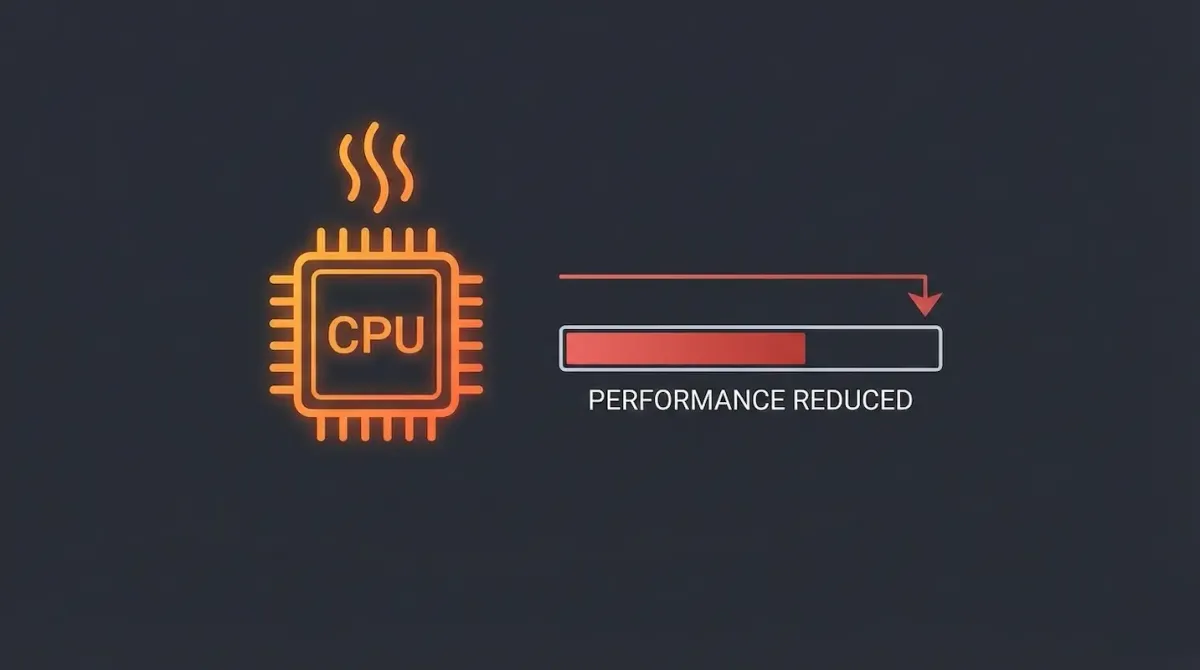
Thermal throttling is a built-in safety feature used by modern processors, including both CPUs and GPUs.
Every processor is designed to operate within a safe temperature range. When the temperature rises too high, the system automatically reduces the processor’s speed to prevent overheating.
For most modern processors:
- CPUs typically throttle near 95°C to 100°C
- GPUs usually throttle around 80°C to 85°C
When these limits are reached, the processor lowers its clock speed and power usage. This reduces heat generation and allows the system to cool down.
In simple terms, thermal throttling means your computer intentionally slows itself down to avoid damage.
Why Thermal Throttling Happens
Thermal throttling occurs when your cooling system cannot remove heat fast enough. This leads to temperature buildup, forcing the system to reduce performance. There are several common causes behind this problem.
Dust Buildup Inside the System
Dust is one of the most common reasons for overheating. Over time, dust accumulates inside your computer, especially on:
- fans
- heatsinks
- air vents
This buildup blocks airflow and traps heat inside the system. Even if your fans are running at full speed, they cannot push air effectively through clogged pathways.
As a result, heat remains inside the system, causing temperatures to rise quickly.
Old or Dried Thermal Paste
Thermal paste plays a critical role in cooling. It sits between the processor and the cooler, helping transfer heat efficiently. However, thermal paste does not last forever. After a few years, it dries out and loses its effectiveness. When this happens, heat cannot transfer properly, and temperatures increase rapidly.
This issue is especially common in laptops because of their compact design and limited cooling space.
Poor Airflow Design
Good airflow is essential for keeping your system cool. In desktop PCs, air should move in a clear path: cool air enters, and hot air exits. If your case has poor airflow, hot air gets trapped inside. This raises internal temperatures and leads to throttling.
Laptops can also suffer from airflow problems, especially when:
- vents are blocked
- the device is used on soft surfaces like beds or cushions
In such cases, airflow is restricted, and heat builds up quickly.
Common Signs of Thermal Throttling
Thermal throttling does not always show an error message, but there are clear warning signs you can notice. One of the most common signs is performance drops during gaming or heavy tasks. The system may run smoothly at first, but after a few minutes, frame rates suddenly drop and gameplay becomes unstable.
You may also notice that performance improves temporarily after closing applications, only to drop again once the system heats up.
Another strong indicator is loud and constant fan noise. When your system is overheating, fans run at maximum speed for long periods.
In laptops, physical heat is also a warning sign. The keyboard or palm rest may become uncomfortably hot, making it difficult to use the device.
To confirm thermal throttling, you can use monitoring tools like:
- HWMonitor
- MSI Afterburner
- built-in system utilities
These tools show temperature spikes that occur just before performance drops.
How to Fix Thermal Throttling Without Upgrading Hardware
The best part about thermal throttling is that it can often be fixed with simple maintenance and adjustments.
Clean Your System Properly
Cleaning your system is one of the easiest and most effective solutions. Use compressed air to remove dust from:
- fans
- vents
- heatsinks
If you are using a desktop, open the case and clean it carefully. For laptops, focus on external vents and accessible areas.
When cleaning, always hold the fan blades in place to prevent them from spinning too fast, which could damage internal components.
Replace Thermal Paste
Applying new thermal paste can significantly improve heat transfer. Over time, old paste becomes dry and ineffective. Replacing it with high-quality thermal paste can reduce temperatures by 10 to 15 degrees Celsius.
This is one of the most effective fixes, especially for older systems or laptops.
Undervolt the CPU or GPU
Undervolting is a powerful technique that reduces the voltage supplied to your processor.
Most processors use more voltage than necessary by default. By lowering the voltage slightly, you can reduce heat output without sacrificing performance.
Tools like:
allow you to safely adjust voltage settings. Undervolting is especially useful for laptops, where cooling is limited.
Improve Airflow
Improving airflow can make a significant difference in temperature.
For desktop PCs, ensure proper fan placement:
- intake fans at the front or bottom
- exhaust fans at the rear or top
This creates a smooth airflow path that removes hot air efficiently.
For laptops, always use them on hard, flat surfaces. Avoid placing them on beds, pillows, or fabric surfaces that block airflow.
Using a laptop cooling pad can also help improve airflow and reduce temperatures.
Conclusion
Thermal throttling is a common issue that affects both high-end and budget systems. It occurs when your computer reduces performance to protect itself from excessive heat.
While it may seem like a problem, it is actually a safety mechanism. The real issue lies in poor cooling, dust buildup, or inefficient heat transfer.
By cleaning your system, replacing thermal paste, improving airflow, and applying undervolting techniques, you can significantly reduce temperatures and restore performance. In most cases, simple maintenance is all it takes to bring your system back to its full potential.
Source - intel.com , tomshardware.com