
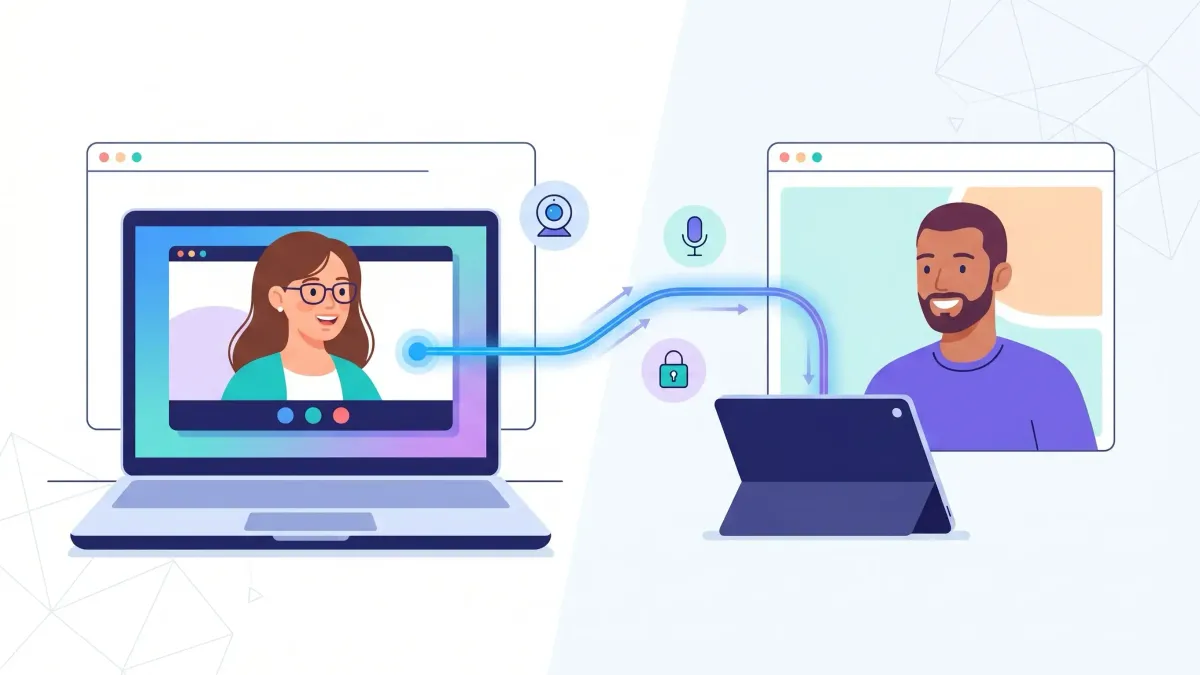
Real-time communication has evolved rapidly over the past decade. Since its release in 2011, Web Real-Time Communication (WebRTC) has been one of the most important technologies for building browser-based video calls, voice chats, and peer-to-peer data sharing applications. It allowed developers to create powerful communication tools without relying on external plugins, which was a major breakthrough at the time.
However, modern applications in 2026 demand much more than simple one-to-one communication. Today’s platforms require massive scalability, ultra-low latency, cloud-based processing, and high reliability across different network environments. Because of this, developers are increasingly exploring alternatives to WebRTC that better fit specific use cases.
This guide explains the best WebRTC alternatives, how they work, and when you should use each one.
Why Developers Look for WebRTC Alternatives
WebRTC is excellent for direct peer-to-peer communication, especially for small-scale video calls. But its design has limitations when used in large or complex systems.
The biggest issue comes from its peer-to-peer nature. In a small call between two users, WebRTC works efficiently. However, when multiple users join a session, each participant must send data to every other participant. This creates a large number of simultaneous connections, which quickly overloads devices and networks.
To solve this, developers often introduce server-based systems like SFUs or MCUs. While effective, these systems add complexity and increase infrastructure costs.
Another challenge is network compatibility. WebRTC relies heavily on UDP, which is fast but not always supported in strict network environments like corporate firewalls. In such cases, additional relay servers are required, making the system harder to maintain.
Because of these limitations, developers choose alternatives based on their specific needs, such as scalability, reliability, or latency.
WebSockets: The Reliable Real-Time Data Solution
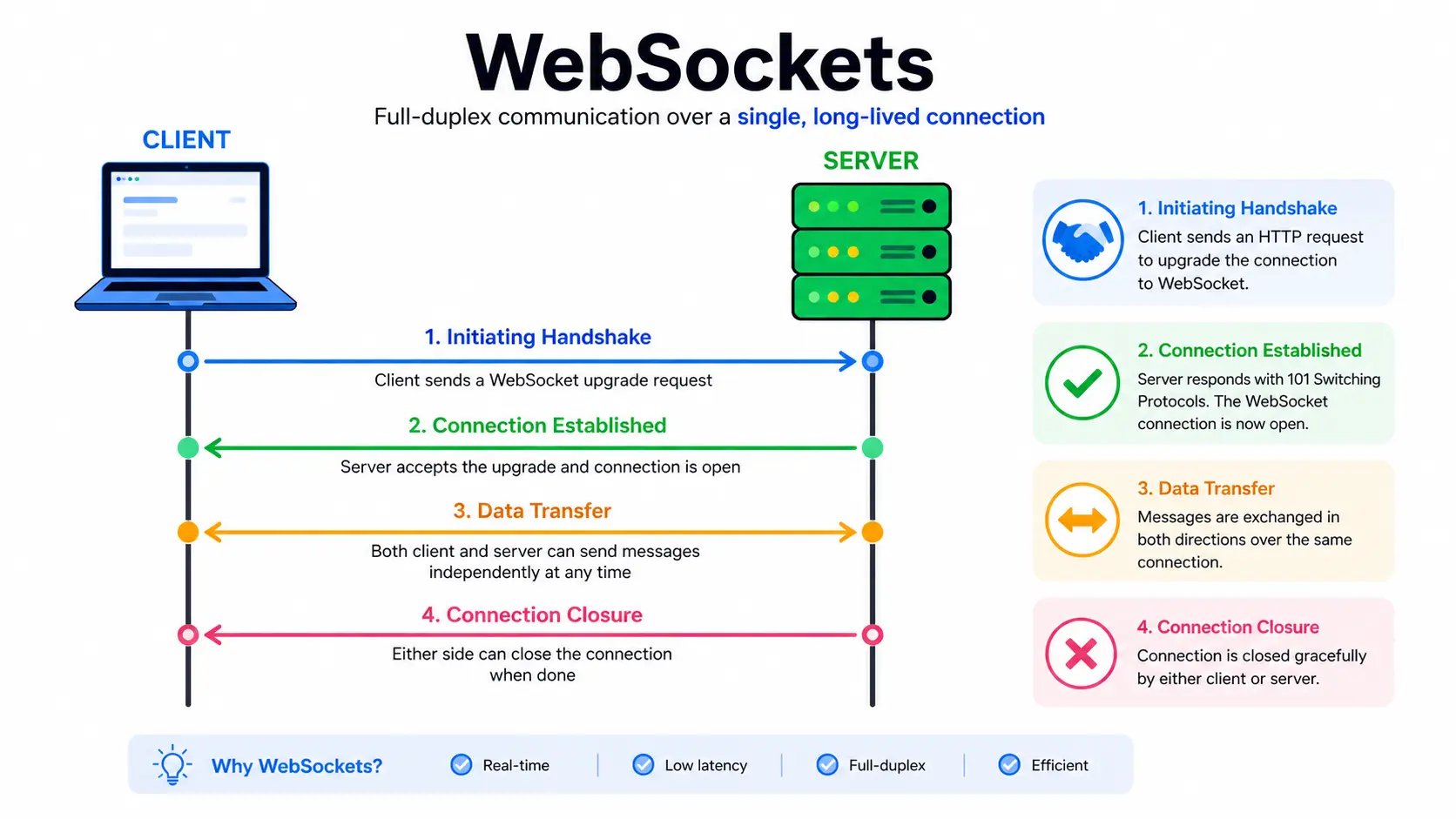
WebSockets are one of the most widely used alternatives when real-time data communication is required instead of media streaming.
Unlike traditional HTTP requests, which repeatedly open and close connections, WebSockets maintain a continuous connection between the client and server. This allows both sides to send and receive data instantly.
This makes WebSockets ideal for:
- live chat applications
- real-time dashboards
- collaborative tools like document editors
- multiplayer games that rely on data updates
Because WebSockets use TCP, they guarantee that data arrives in the correct order. This reliability is very useful for applications where accuracy is critical.
However, this same reliability can become a problem for media streaming. If a single packet is delayed, the entire stream pauses until it is recovered. This causes noticeable lag in video or audio applications, making WebSockets unsuitable for real-time streaming.
WebTransport and HTTP/3: The Next-Generation Solution
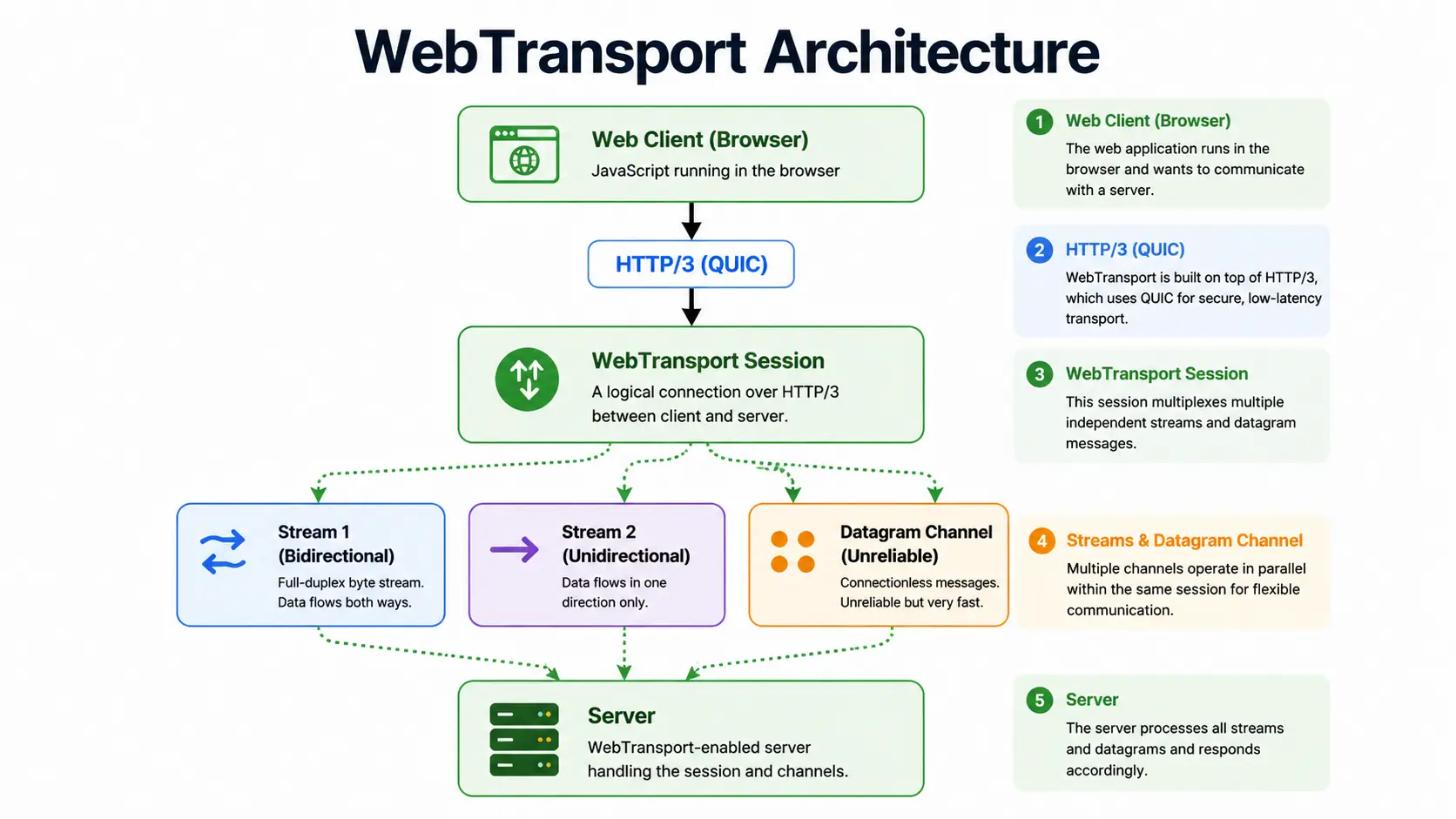
WebTransport is one of the most advanced alternatives available today. It is built on top of HTTP/3 and the QUIC protocol, which were designed to overcome the limitations of older technologies.
Unlike TCP-based systems, WebTransport uses UDP while still providing flexibility for both reliable and unreliable data transmission. This means developers can choose how different types of data are handled.
For example:
- critical data like chat messages can be sent reliably
- video frames can be sent without strict delivery guarantees
This approach solves the head-of-line blocking issue found in WebSockets. If one data stream is delayed, it does not affect others.
WebTransport is particularly useful for:
- cloud gaming platforms
- interactive live streaming
- remote desktop applications
- real-time collaboration tools
It offers the low latency of WebRTC but without the complexity of peer-to-peer connections, making it a strong candidate for future applications.
Low-Latency HLS: The Best for Large-Scale Streaming
When the goal is to broadcast content to a large audience, WebRTC is not the best choice. It struggles to scale efficiently for one-to-many communication.
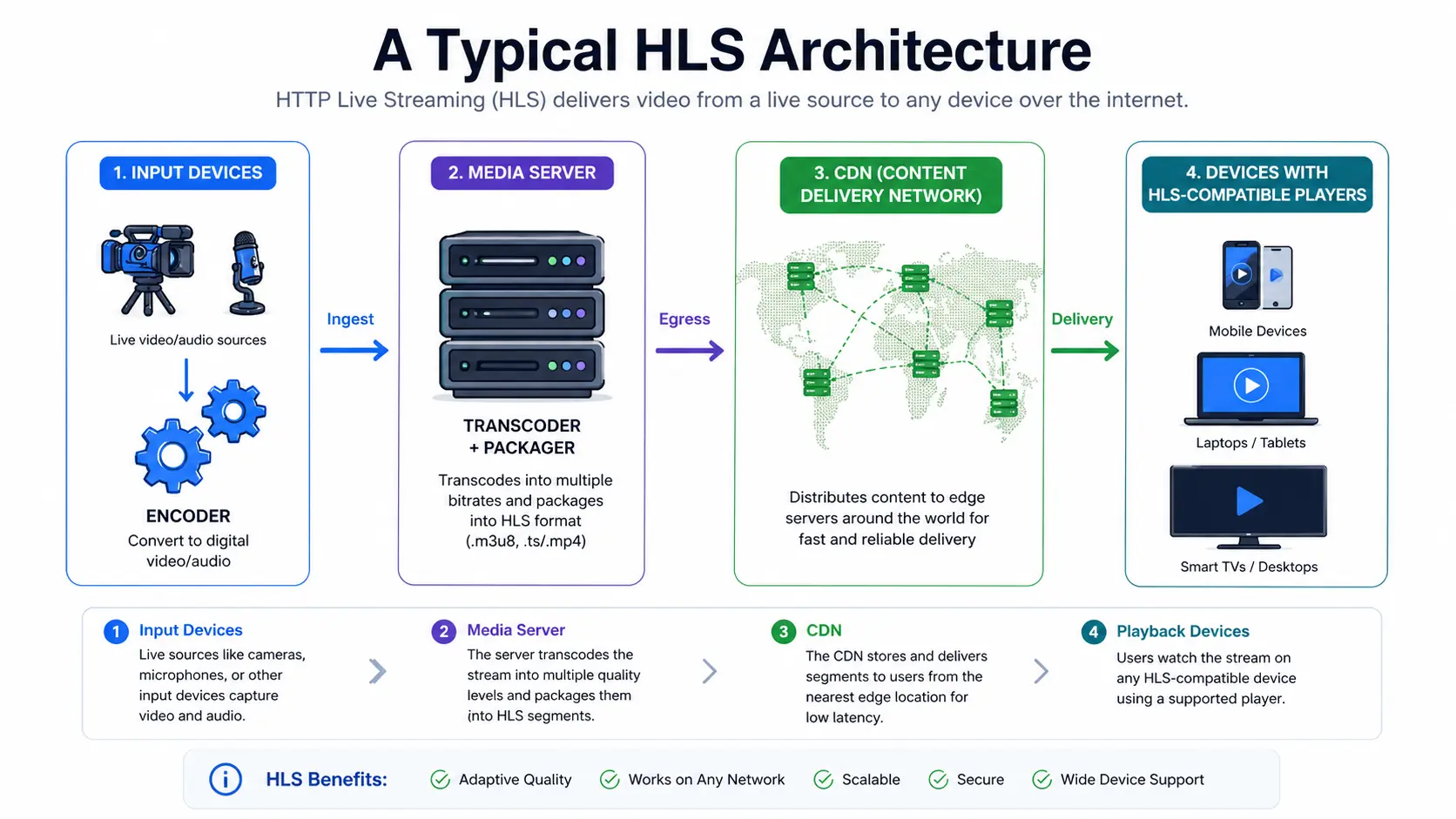
Low-Latency HTTP Live Streaming (LL-HLS) is designed specifically for this purpose. It is widely used in streaming platforms where content needs to reach thousands or even millions of viewers.
Traditional HLS had high latency, often delaying streams by 10 to 30 seconds. This made it unsuitable for interactive content. However, LL-HLS introduced improvements that reduce latency to just a few seconds.
It works by breaking video into smaller segments and delivering them continuously through Content Delivery Networks (CDNs). This allows it to scale globally with minimal infrastructure complexity.
LL-HLS is best suited for:
- live sports streaming
- online events and concerts
- large-scale video broadcasts
- content platforms similar to YouTube or Twitch
While it does not achieve the ultra-low latency of WebRTC, its scalability makes it the preferred option for mass streaming.
CPaaS Platforms: The Simplest Approach
For developers who want real-time communication without managing infrastructure, Communication Platform as a Service (CPaaS) solutions are a practical alternative.
Platforms like Twilio, Agora, and Zoom provide ready-made tools and APIs for building communication features. These services handle everything, including server management, scaling, and network optimization.
Some of these platforms still use WebRTC internally, but they improve performance by routing traffic through optimized global networks.
The advantages of CPaaS solutions include:
- faster development time
- built-in scalability
- reduced maintenance effort
- reliable global performance
However, these benefits come at a cost. Developers must pay for usage and depend on third-party services, which may limit flexibility.
Choosing the Right Alternative
There is no single technology that works best for every situation. The right choice depends entirely on your application requirements.
If your focus is real-time data communication, WebSockets provide a reliable and simple solution. For high-performance applications that require low latency and flexibility, WebTransport is the most advanced option.
If your goal is large-scale broadcasting, LL-HLS offers unmatched scalability and efficiency. And if you want to avoid managing infrastructure entirely, CPaaS platforms provide a convenient and powerful solution.
Understanding your use case is the key to selecting the right technology.
Conclusion
WebRTC remains a powerful tool for real-time communication, but it is no longer the only option available. As modern applications demand higher performance, scalability, and flexibility, developers are turning to specialized alternatives.
Technologies like WebSockets, WebTransport, LL-HLS, and CPaaS platforms each offer unique advantages depending on the use case. By choosing the right solution, developers can build faster, more reliable, and more scalable applications.
In 2026, the future of real-time communication is not about replacing WebRTC entirely, but about selecting the best tool for each specific problem.
Sources - datatracker.ietf.org, datatracker.ietf.org, developer.apple.com, w3.org