
The personal computer industry is undergoing one of the biggest transformations in its history. For decades, buying a powerful computer followed a familiar formula. You would choose a processor from Intel or AMD, add a separate graphics card from NVIDIA or AMD, install system memory and connect everything through a motherboard. This traditional design has powered everything from office computers to gaming machines and professional workstations.
However, the rise of artificial intelligence, advanced content creation, and power-efficient computing is forcing hardware manufacturers to rethink how computers are built. Users now expect laptops to deliver desktop-class performance, all-day battery life, and the ability to run sophisticated AI models locally. Meeting all of these requirements using traditional hardware designs is becoming increasingly difficult.
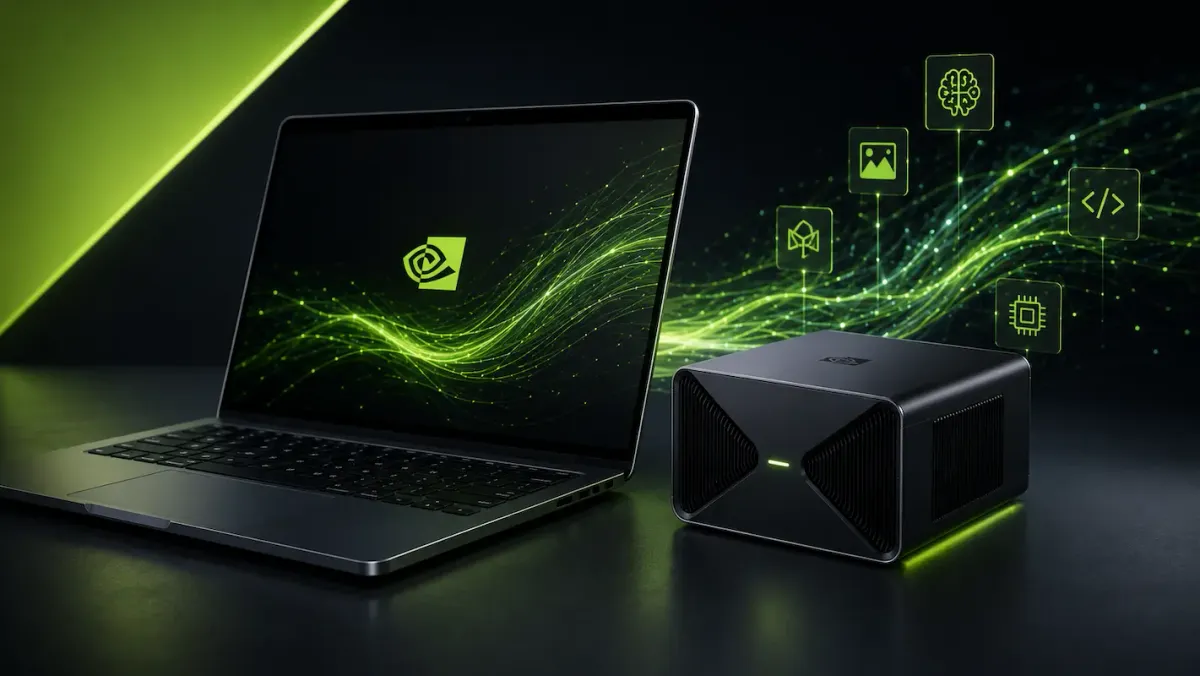
At Computex 2026 in Taipei, NVIDIA introduced a product that aims to solve these challenges. Called RTX Spark, the new platform is far more than just another graphics card or processor. It represents a completely new category of computing hardware designed for the AI era. Shortly after its announcement, RTX Spark became one of the most discussed topics in the technology industry. Journalists, developers, gamers and content creators immediately began debating how this new architecture could change the future of Windows computers.
In this guide, we will explore exactly what RTX Spark is, how it works, why unified memory is such a significant breakthrough and why many experts see it as one of NVIDIA's most ambitious projects ever.
What Exactly Is RTX Spark?
To understand why RTX Spark has generated so much excitement, it is important to first understand what kind of hardware it actually is.
RTX Spark is a highly advanced System on a Chip, often abbreviated as SoC. Unlike traditional computers where the processor, graphics card, and memory exist as separate components, a System on a Chip combines multiple major computing elements into a single silicon package.
This approach offers major advantages. Because the CPU and GPU sit on the same chip, communication between them becomes significantly faster. Data no longer needs to travel through a motherboard and multiple hardware interfaces. Instead, information can move almost instantly between different processing units.
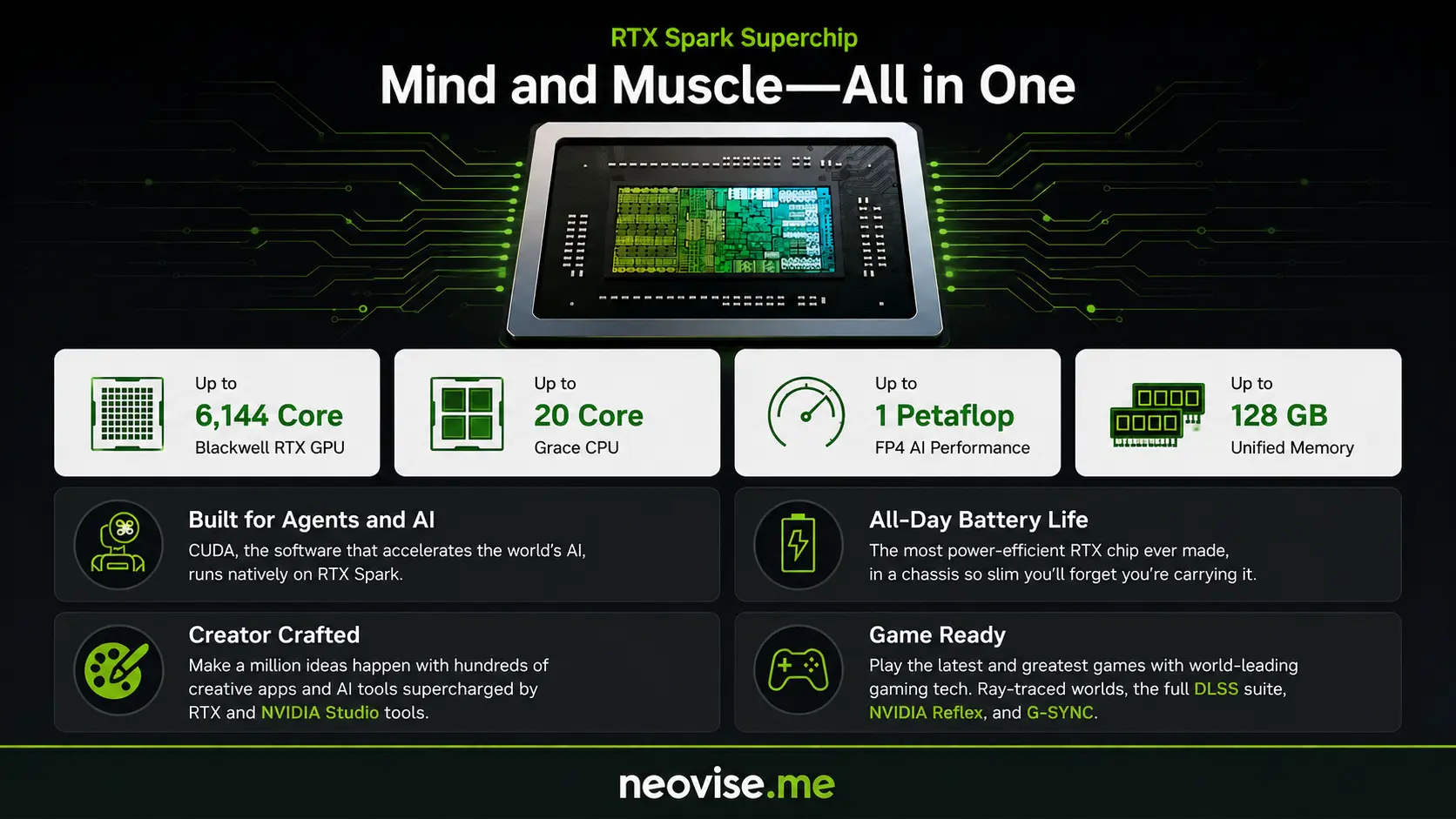
The RTX Spark combines a 20-core processor based on NVIDIA's Grace architecture with a powerful Blackwell-based RTX graphics processor containing more than 6,000 CUDA cores. These components are connected through NVIDIA's ultra-fast NVLink-C2C interconnect, allowing them to exchange data at remarkable speeds.
The primary goal of this architecture is efficiency. By placing critical components on a single chip, RTX Spark can deliver impressive performance while consuming much less power than traditional desktop-class hardware. This makes it particularly attractive for premium laptops and compact desktop systems where power consumption and heat generation are major concerns.
As a result, RTX Spark-powered devices promise a combination of performance, battery life, and portability that was previously difficult to achieve on Windows computers.
The Revolutionary Unified Memory Architecture
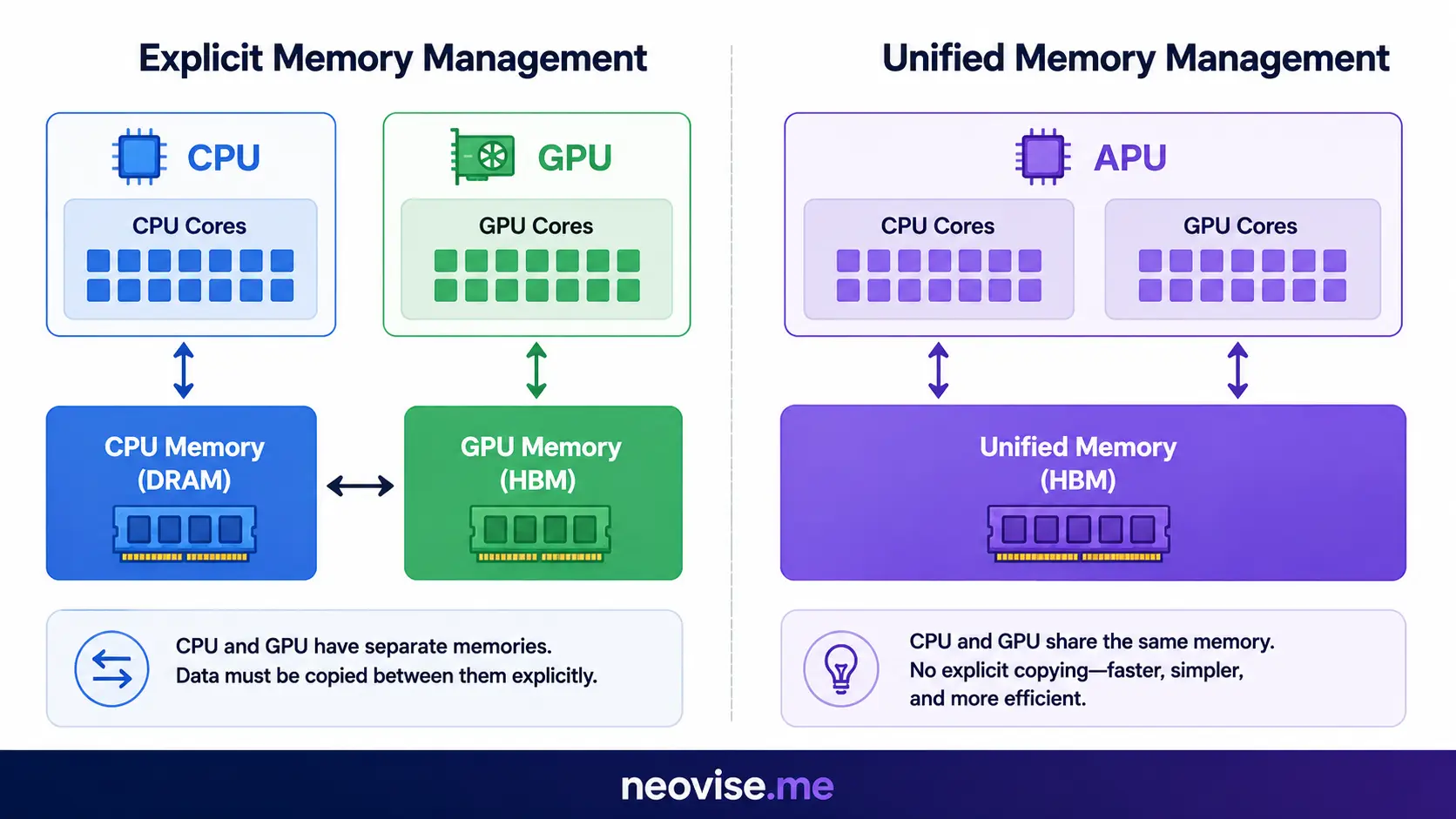
Perhaps the most talked-about feature of RTX Spark is its unified memory architecture.
Traditional computers typically separate memory into two categories. The processor uses system RAM, while the graphics card uses dedicated VRAM. These two memory pools operate independently, which can create limitations during demanding workloads.
For example, imagine a computer with 32GB of system RAM and an 8GB graphics card. Even if the system still has plenty of unused RAM available, the graphics processor cannot efficiently access it when its dedicated VRAM becomes full. This limitation can create bottlenecks in gaming, 3D rendering, and artificial intelligence workloads.
RTX Spark eliminates this problem entirely.
Instead of maintaining separate memory pools, the platform uses a single massive pool of high-speed LPDDR5X memory that both the CPU and GPU can access simultaneously. NVIDIA has announced support for configurations with up to 128GB of unified memory.
This approach dramatically changes how software can utilize system resources. Rather than worrying about VRAM limitations, applications can access the full memory pool as needed. Large datasets, complex 3D environments, and advanced AI models can remain loaded in memory without constantly moving data between separate storage locations.
For digital artists, this means massive projects become much easier to handle. A creator working with an enormous 90GB 3D scene can load the entire project into memory without worrying about VRAM restrictions. Video editors can work with extremely high-resolution footage while maintaining smooth performance. AI developers can run larger models directly on their machines.
This unified memory strategy closely resembles the architecture that helped Apple's silicon-powered MacBooks gain popularity among creative professionals. With RTX Spark, NVIDIA is bringing a similar concept to the Windows ecosystem.
Why RTX Spark Uses Arm Instead of x86
One of the biggest surprises surrounding RTX Spark is its use of the Arm architecture. For decades, Windows computers have relied on x86 processors from Intel and AMD. This architecture has dominated personal computing for generations and powers the vast majority of desktop and laptop systems worldwide.
RTX Spark takes a different approach.
Instead of x86, it uses Arm-based technology. Arm processors are well known for their exceptional efficiency and are commonly found in smartphones, tablets, and energy-efficient devices. Historically, Windows struggled on Arm hardware due to compatibility issues and limited software support. However, Microsoft has spent years improving Windows on Arm and preparing the platform for mainstream adoption.
To support RTX Spark, Microsoft worked closely with NVIDIA to optimize Windows 11 for the new architecture. The operating system has been fine-tuned to take advantage of the chip's capabilities while maintaining compatibility with existing applications.
A key part of this strategy is Microsoft's Prism emulator. Prism automatically translates older x86 applications so they can run on Arm-based hardware. This means users can continue using many of their existing applications even if those programs were never designed specifically for Arm processors.
The result is a Windows experience that combines desktop-class performance with the efficiency advantages traditionally associated with mobile devices.
Built for the Age of Artificial Intelligence
Although RTX Spark offers advantages for general computing, artificial intelligence is arguably the platform's primary focus. The way people use AI today often depends on cloud infrastructure. When users interact with AI chatbots, image generators, or coding assistants, requests are usually sent to powerful remote servers for processing.
This approach works well, but it has drawbacks. It requires an internet connection, introduces delays, and raises privacy concerns because personal information leaves the user's device. RTX Spark is designed to change this model by enabling local AI processing. The platform combines a powerful Blackwell GPU with fifth-generation Tensor Cores and advanced FP4 precision support. According to NVIDIA, the system can deliver up to one petaflop of AI performance.
This level of processing power allows users to run large AI models directly on their own computers. Instead of sending requests to a remote data center, the AI can operate locally while keeping sensitive information private.
Imagine having an intelligent assistant that can analyze documents, write emails, organize files, summarize research, and manage schedules entirely on your device. RTX Spark aims to make this vision a reality.
As AI continues to become more integrated into everyday computing, local processing capabilities could become one of the platform's most important advantages.
The Role of MediaTek in RTX Spark
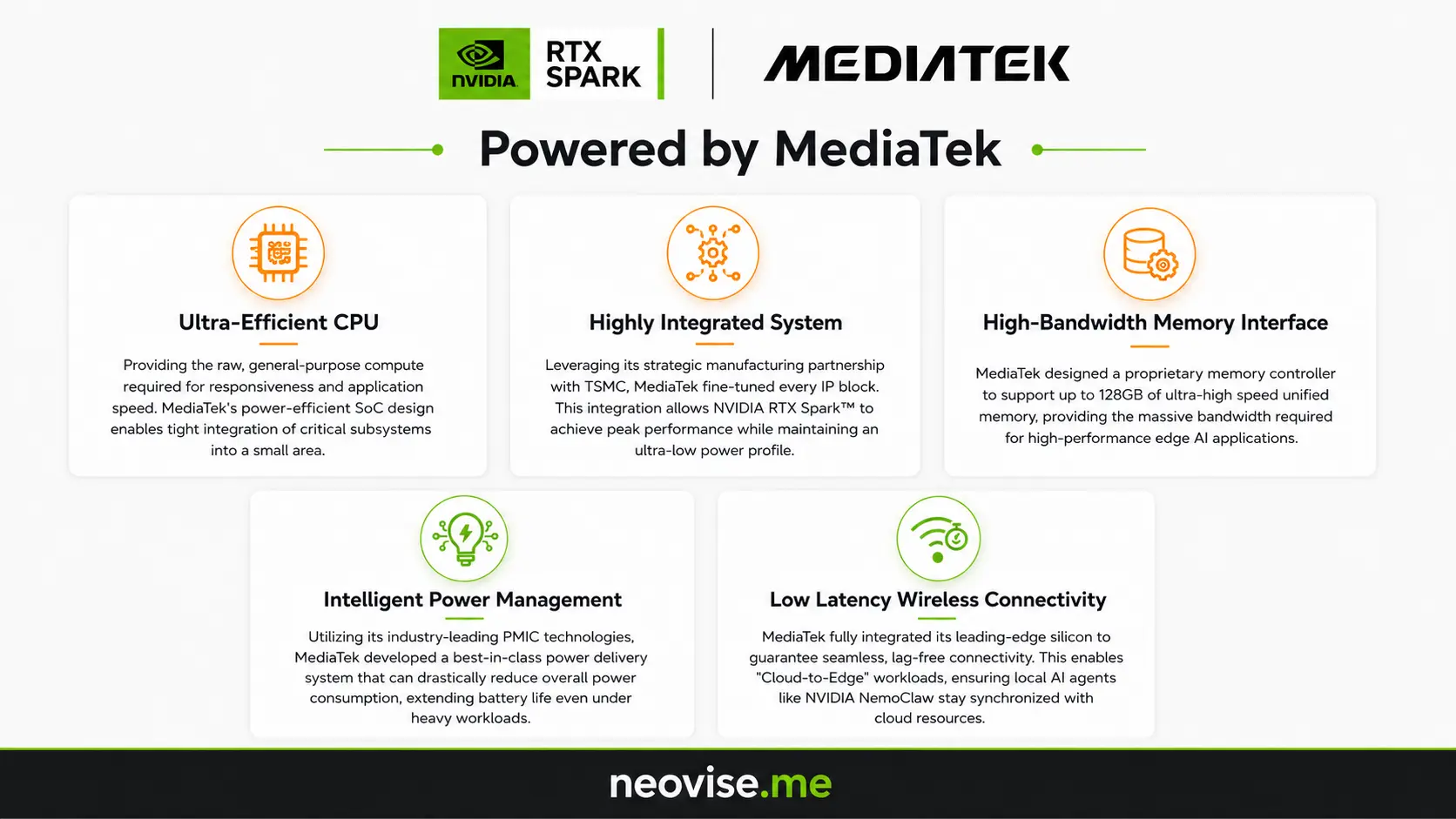
Creating a successful System on a Chip requires expertise beyond graphics technology alone. To ensure RTX Spark delivered a complete and balanced experience, NVIDIA partnered with MediaTek during development.
MediaTek is one of the world's leading semiconductor companies and is particularly well known for designing efficient processors used in smartphones, tablets, smart TVs, and other connected devices.
The company contributed significantly to the platform's CPU and power management systems. MediaTek helped optimize energy consumption, ensuring RTX Spark devices can deliver strong performance without sacrificing battery life.
The collaboration also extends to connectivity. MediaTek's advanced wireless technologies are integrated into the platform, allowing devices to support fast and reliable Wi-Fi connections.
By combining NVIDIA's expertise in AI and graphics with MediaTek's experience in efficient system design, RTX Spark aims to offer a balanced platform suitable for modern computing workloads.
Can RTX Spark Handle Modern Gaming?
Whenever NVIDIA launches a new hardware platform, gamers immediately ask one question: can it play games? The answer appears to be yes.
RTX Spark contains a genuine Blackwell-based RTX graphics processor with thousands of CUDA cores. This provides substantial graphical performance capable of running modern AAA games at high resolutions and frame rates.
The platform also supports many of NVIDIA's flagship gaming technologies, including:
- Ray Tracing
- NVIDIA Reflex
- G-SYNC
- DLSS 4.5
DLSS 4.5 introduces advanced AI-powered image reconstruction techniques that improve visual quality while boosting performance. NVIDIA claims the technology can deliver more realistic lighting and shadow reconstruction than previous generations.
Despite these strengths, RTX Spark is not primarily designed as a gaming-focused platform. Its main objective is to serve as an AI and creative workstation. Because the platform uses Arm architecture, some older software and certain anti-cheat systems may face compatibility challenges. Fortunately, many major developers are already working on native support.
Companies such as Riot Games have confirmed support for popular titles including League of Legends and Valorant. As software adoption grows, gaming compatibility is expected to improve significantly.
A Powerful Platform for Creators
While gamers will certainly benefit from RTX Spark, content creators may be the group that gains the most from its capabilities.
Creative professionals routinely work with massive files that place enormous demands on computer hardware. Video editors process high-resolution footage, animators build complex scenes, and designers manage large visual assets.
Traditional laptops often struggle with these workloads because of memory limitations and thermal constraints.
RTX Spark changes the equation.
Its unified memory architecture allows creators to work with significantly larger projects without encountering VRAM bottlenecks. The combination of Grace CPU cores, Blackwell graphics, and AI acceleration creates an environment ideally suited for creative applications.
Tasks such as:
- 12K video editing
- Advanced 3D rendering
- AI image generation
- AI video creation
- Large Unreal Engine projects
- Professional visual effects work
can all benefit from the platform's architecture.
Major software developers are already preparing optimized versions of their applications to take advantage of RTX Spark's capabilities. This could transform how creative professionals work on portable devices.
Availability and Pricing Expectations
NVIDIA and Microsoft have announced that the first RTX Spark-powered devices are expected to arrive during the second half of 2026. Several major manufacturers are preparing products based on the new platform, including ASUS, Dell, HP, Lenovo, MSI, and Microsoft's own Surface division.
Although official pricing has not been confirmed, industry analysts expect RTX Spark systems to target the premium segment of the market.
With advanced hardware, large unified memory configurations, AI acceleration, and premium display technologies, these devices are expected to compete directly with high-end creator laptops and flagship productivity machines.
For professionals, developers, and enthusiasts seeking cutting-edge technology, RTX Spark could become one of the most desirable hardware platforms of the coming years.
Conclusion
RTX Spark represents one of the most ambitious projects NVIDIA has ever introduced. By combining a Grace-based Arm processor, a Blackwell RTX GPU, unified memory architecture, advanced AI acceleration, and modern Windows integration, the company is attempting to redefine what a personal computer can be.
The platform addresses many of the limitations associated with traditional PC designs while opening new possibilities for artificial intelligence, content creation, and portable computing. Its massive unified memory pool eliminates longstanding bottlenecks, while local AI capabilities promise a future where powerful digital assistants operate directly on personal devices.
Whether you are a creator working with enormous projects, an AI enthusiast exploring large language models, or a technology enthusiast eager to experience the next generation of computing, RTX Spark offers a glimpse into the future. As the first devices arrive and software ecosystems mature, it may prove to be one of the most influential hardware launches of the AI era.
Sources - Wikipedia, NVIDIA Newsroom, Windows Blog, TechPowerUp, MediaTek, New Atlas