
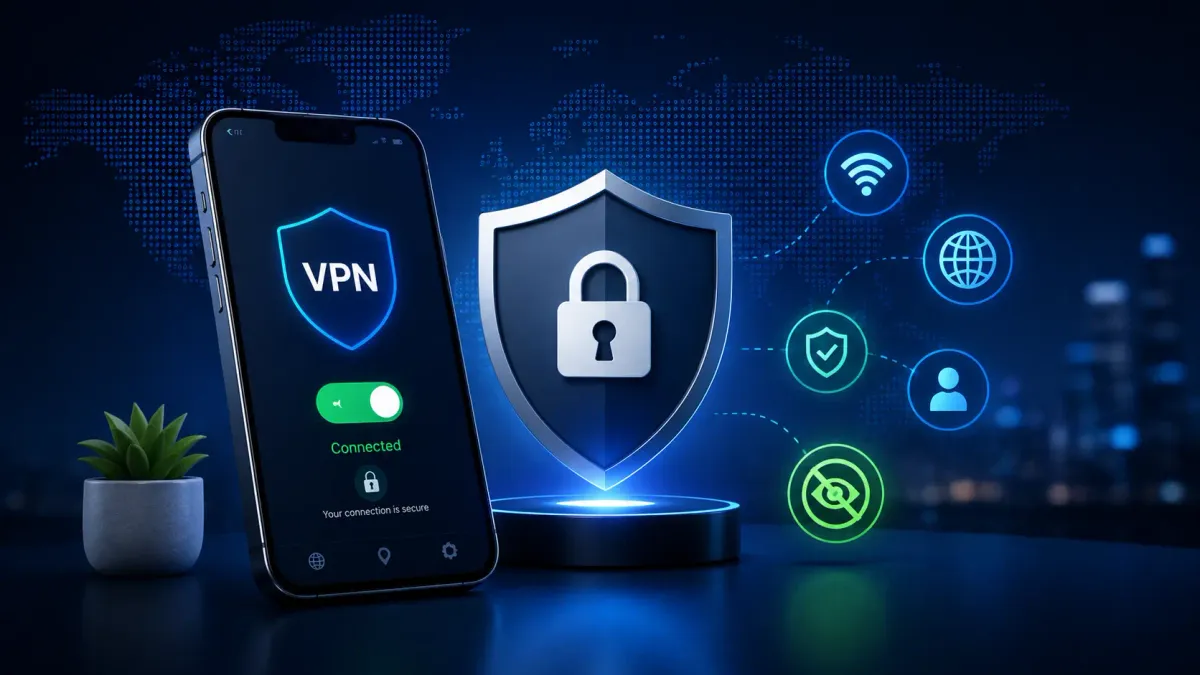
Your smartphone probably knows more about you than your closest friend. It holds your banking app, your private messages, your location history, and your login credentials for dozens of accounts. Yet most people connect that same device to random public Wi-Fi networks without a second thought. If you care about keeping your mobile life private, a free VPN app is one of the simplest tools you can add today, and contrary to popular belief, you don't need to hand over a credit card to get real protection.
The idea that solid mobile security requires a paid subscription is outdated. Several established privacy companies now offer genuinely capable free VPN tiers, no trial periods, no hidden charges, no forced upgrade after a week. Whether you're setting up a brand-new phone or just tightening the security on the one in your pocket right now, this guide breaks down the best truly free VPN apps for mobile devices in 2026, what each one actually gives you, and how to avoid the scams hiding in plain sight on the app stores.
Why Public Wi-Fi Makes a VPN Necessary
Think about how often your phone jumps onto open networks: a coffee shop, an airport lounge, a hotel lobby, a friend's guest network. These connections are convenient, but they're also wide open. Because anyone in range can join the same network, a moderately skilled attacker sitting two tables away can intercept the traffic passing between your phone and the router.
A VPN closes that gap by wrapping your connection in encryption before it ever leaves your device. Once it's active, everything you send and receive is scrambled into unreadable data. Even if someone captures the traffic, they're left with digital noise instead of your passwords or messages. On top of that, a VPN swaps out your real IP address for one belonging to its own server, which stops advertisers, apps, and websites from pinpointing your physical location every time you go online.
Why Some "Free" VPNs Are Actually Dangerous
Before picking an app, it's worth understanding the economics behind free VPN software. Running a global network of servers is expensive, and that cost has to be covered somehow. Reputable companies cover it through paid upgrades. Shady ones cover it by harvesting your browsing data and selling it to data brokers, or worse.
Independent researchers have repeatedly flagged low-quality "free VPN" apps on both the Google Play Store and Apple's App Store for injecting excessive ads, leaking real IP addresses, and in a few documented cases, quietly recruiting user devices into botnets used for cyberattacks. The safest approach is to stick with a handful of companies that have built their reputations on privacy audits and transparent business models rather than downloading whatever app has the flashiest icon.
1. Proton VPN - Best for Truly Unlimited Data
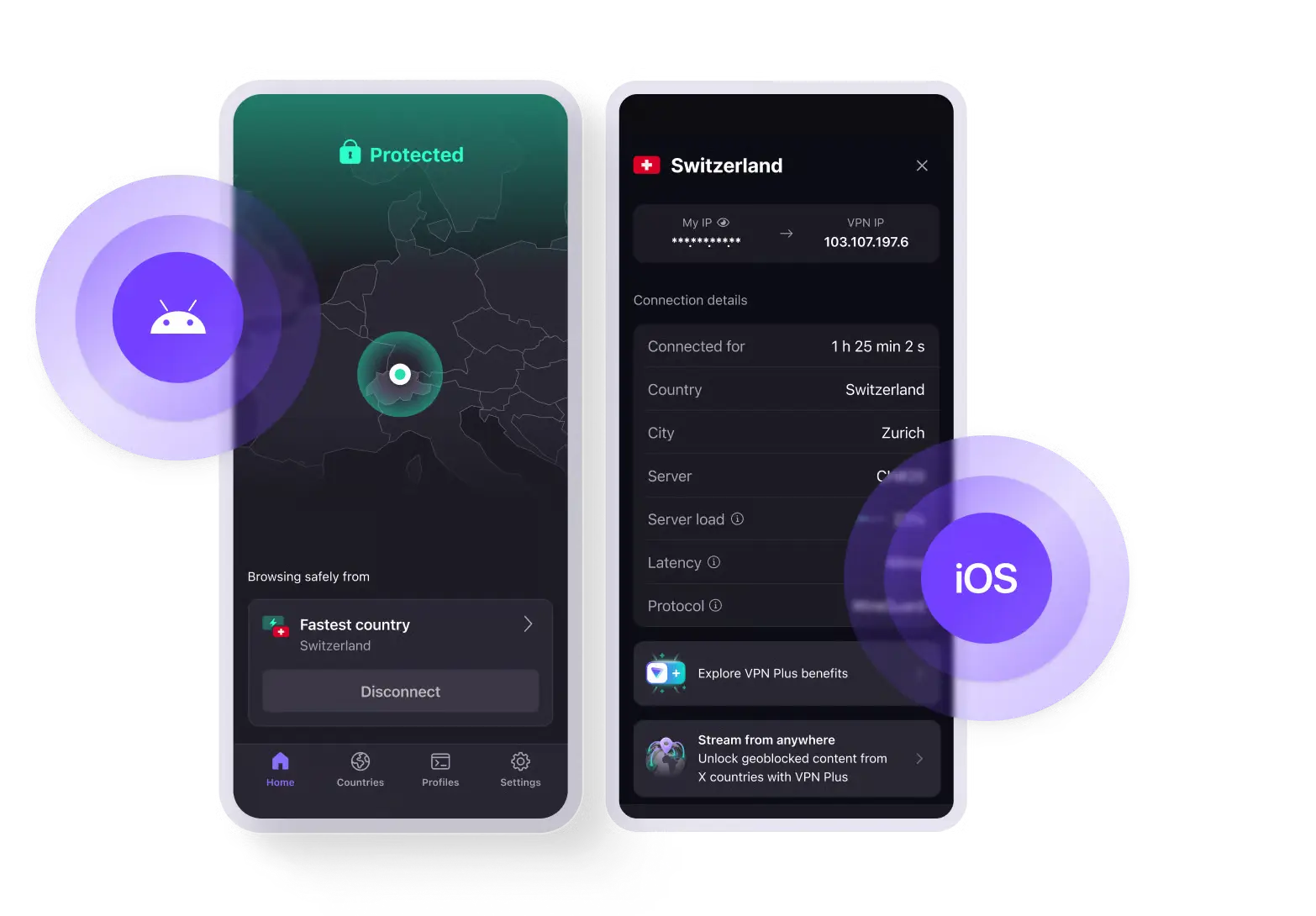
Proton VPN remains the standout option for anyone who wants a free VPN they can leave running all day. The company was founded by scientists who previously worked at CERN, the European particle physics laboratory, and it's headquartered in Switzerland, a country with some of the world's strictest data privacy laws.
What sets Proton apart is that its free tier genuinely has no data cap, no speed throttle, and no time limit. Free users get access to servers spread across roughly ten locations, including the United States, the Netherlands, Japan, Poland, and Romania, though the app automatically routes you to the fastest available option rather than letting you pick a specific city. The free plan is capped at one device, but it carries the same no-logs policy, open-source codebase, and independent audits found on Proton's paid tiers. For everyday browsing, checking email, and general protection, it's hard to beat.
2. PrivadoVPN - Best for Choosing Your Own Server Location
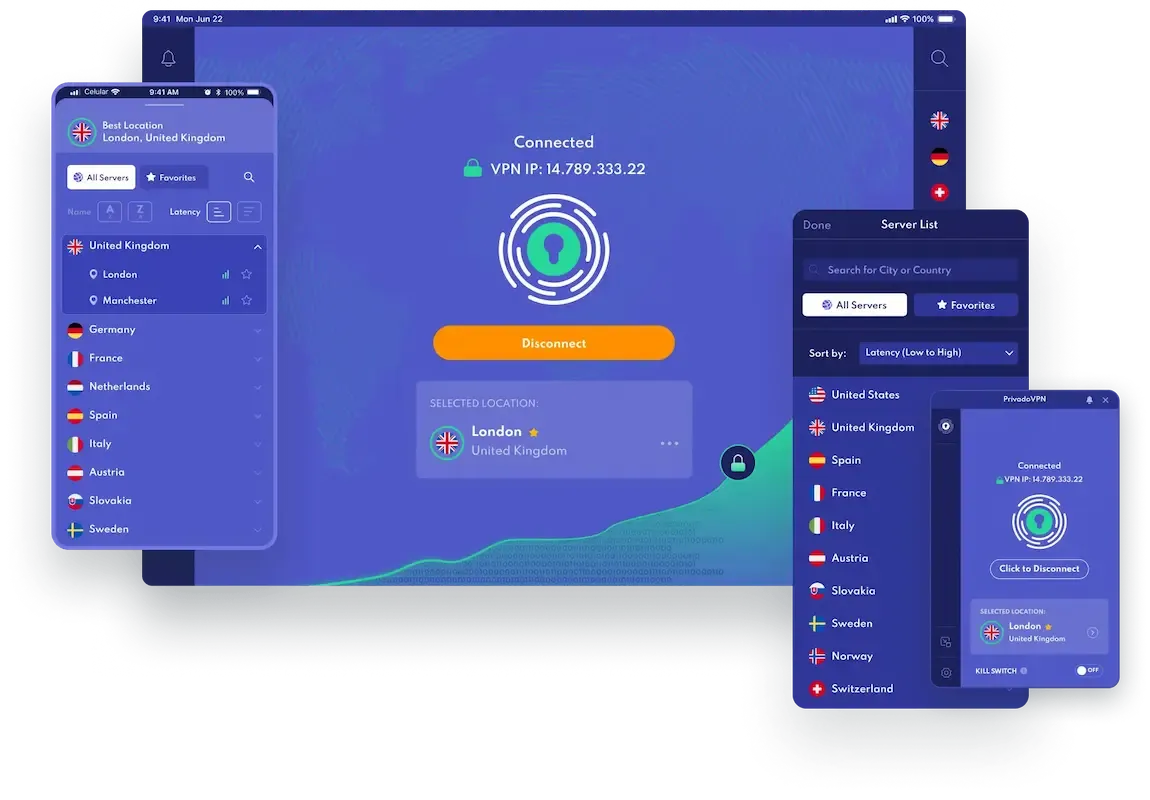
If manual server selection matters more to you than unlimited data, PrivadoVPN is worth a look. This Switzerland-based service gives free users access to 13 server locations across North America, South America, Europe, and Asia, including less common free options like Brazil and Argentina.
The catch is a 10GB monthly data allowance. Once you burn through it, PrivadoVPN doesn't cut you off entirely, it drops you into what the company calls Lite Mode, a slower but still encrypted connection so you're never left completely exposed. For someone who mostly needs protection in short bursts, like checking a bank balance at an airport, that 10GB tends to go a long way.
3. Hide.me - Best for Advanced Configuration Options
Hide.me, operated out of Malaysia by eVenture Ltd since 2012, has built a loyal following among users who like fine-grained control over their VPN setup. The free tier now includes unlimited monthly data, a meaningful upgrade from the tighter caps the company enforced in earlier years, along with access to roughly eight server locations concentrated mostly in Europe and North America.
The free app includes a functioning kill switch and split tunneling on supported platforms, features that many competitors reserve exclusively for paying customers. The trade-off is speed. Hide.me openly throttles bandwidth on its free servers, so while browsing and messaging work fine, streaming video or downloading large files will feel sluggish. Hide.me's no-logs claims were independently reviewed by the cybersecurity firm Securitum, and the company has published transparency reports since 2012 confirming it has never had user data to hand over to authorities.
4. Windscribe - Best for a Balance of Speed and Features
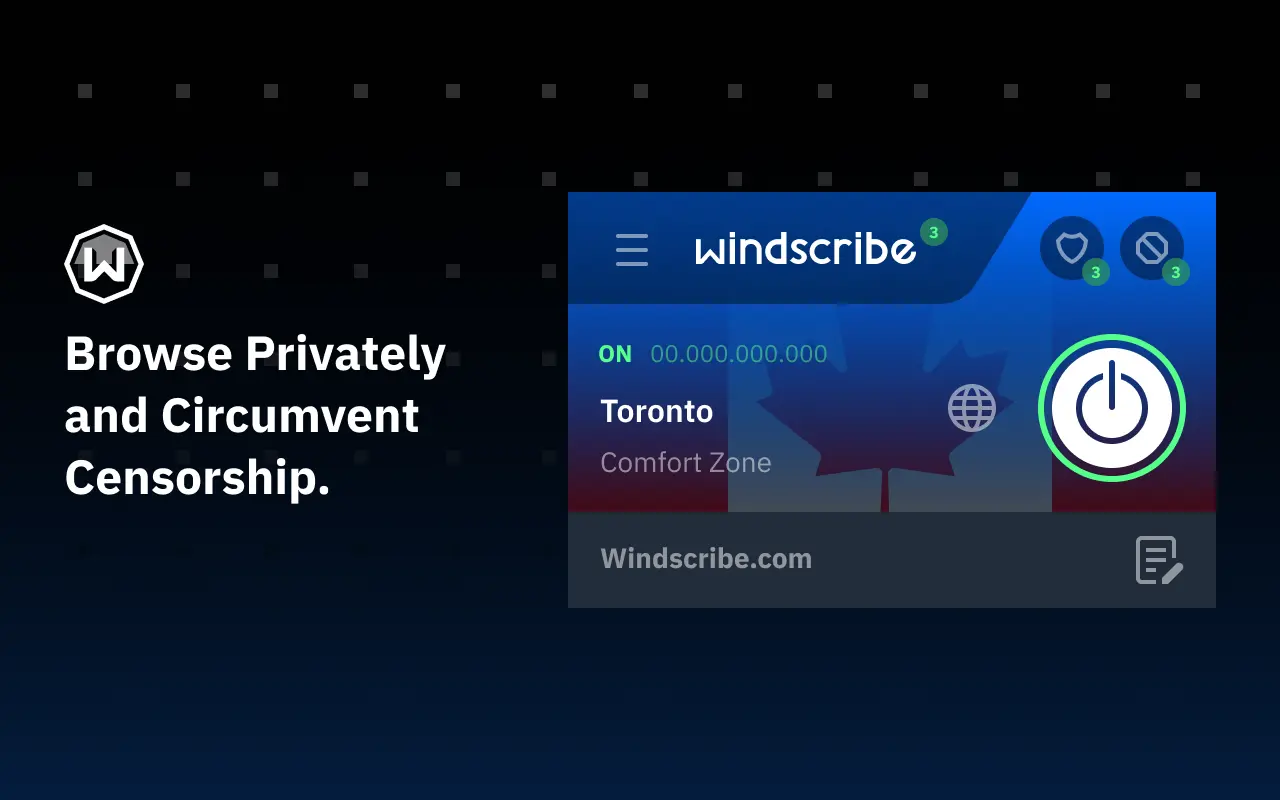
Windscribe, based in Ontario, Canada, blends a playful brand voice with a surprisingly deep feature set on its free tier. New sign-ups without a confirmed email get 2GB of monthly data; confirming your email bumps that up to 10GB automatically, and tweeting about the service adds another 5GB on top of that.
Free users get access to roughly ten server locations, including Canada, the United States, Switzerland, Hong Kong, and Germany, and unlike some competitors, Windscribe doesn't cap the number of personal devices you can connect at once. The free plan includes the same firewall-based kill switch and a limited version of the company's R.O.B.E.R.T. ad and tracker blocker found in the paid version. For travelers who want dependable protection without babysitting a data meter every few days, it's a strong middle-ground choice.
Layering a DNS Filter on Top of Your VPN
A VPN handles encryption and location masking extremely well, but pairing it with a privacy-focused DNS service like AdGuard DNS adds another layer that a VPN alone doesn't cover.
Every time your phone loads a website, it consults a DNS server to translate that address into a numerical location on the internet, essentially the internet's phonebook. By default, your mobile carrier controls that phonebook. Switching to a service like AdGuard DNS routes those lookups through servers that block known ad networks, phishing domains, and tracking scripts before they ever reach your screen. Combined with an encrypted VPN tunnel from Proton VPN or PrivadoVPN, this pairing strips out most of the junk that slows your phone down and drains its battery in the background.
Matching the Right Free VPN to Your Habits
The "best" free VPN really depends on how you actually use your phone. If you're someone who streams music, scrolls video-heavy feeds for hours, or regularly downloads large attachments, a strict data cap will frustrate you fast, which makes Proton VPN's unlimited free plan the clear pick. If your usage is lighter, checking email, reading the news, occasional messaging, a capped plan like PrivadoVPN or Windscribe gives you more flexibility over server location in exchange for a data ceiling that most casual users rarely hit anyway.
How These Companies Stay Afloat Without Selling Your Data
It's a fair question: if these companies aren't monetizing your browsing habits, how do they pay for servers spread across dozens of countries? The answer is the freemium model. Proton, PrivadoVPN, Hide.me, and Windscribe all offer premium subscriptions with expanded server networks, multi-device support, and faster speeds. Paying customers fund the infrastructure, which subsidizes a genuinely usable free tier for everyone else. It's the same model used by companies like Proton Mail and countless other privacy-first services, and it's a far more sustainable arrangement than quietly selling user data to advertisers.
Setting Up a Free Mobile VPN in Minutes
Getting protected doesn't require any technical background. Open the Google Play Store on Android or the App Store on iPhone, and search for the official app from the provider you've chosen, double-check the developer name to avoid copycat apps designed to mimic legitimate services. Download it, open it, and create a free account, typically nothing more than a valid email address is required, and no reputable free tier will ever ask for payment details up front. From there, tap connect, approve the VPN configuration prompt your phone displays, and within seconds your traffic is encrypted, usually signaled by a small key or shield icon appearing in your status bar.
Final Thoughts
Protecting your phone's connection shouldn't come with a monthly bill attached. Proton VPN, PrivadoVPN, Hide.me, and Windscribe each offer a legitimate path to encrypted browsing without ever asking for a credit card, and each one is backed by a business model that doesn't rely on selling your personal data. Pair whichever one fits your habits with a DNS filter like AdGuard DNS, and you'll have covered the two biggest gaps in most people's mobile security setup, all without spending a cent.
Sources - Proton VPN , Proton VPN Pricing, PrivadoVPN , PrivadoVPN Support, vpnMentor, Cloudwards , Windscribe, Security.org