Google’s TranslateGemma: High‑Quality AI Translation for 55 Languages

 English
 Russian
 Español
 Français
 Deutsch
 हिन्दी
 සිංහල
සිංහල 中文
中文 日本語
日本語
We’ve all been there: you use a translation tool to convert a long paragraph, and while the words are technically correct, the “vibe” is completely wrong. It sounds like a robot wrote it.
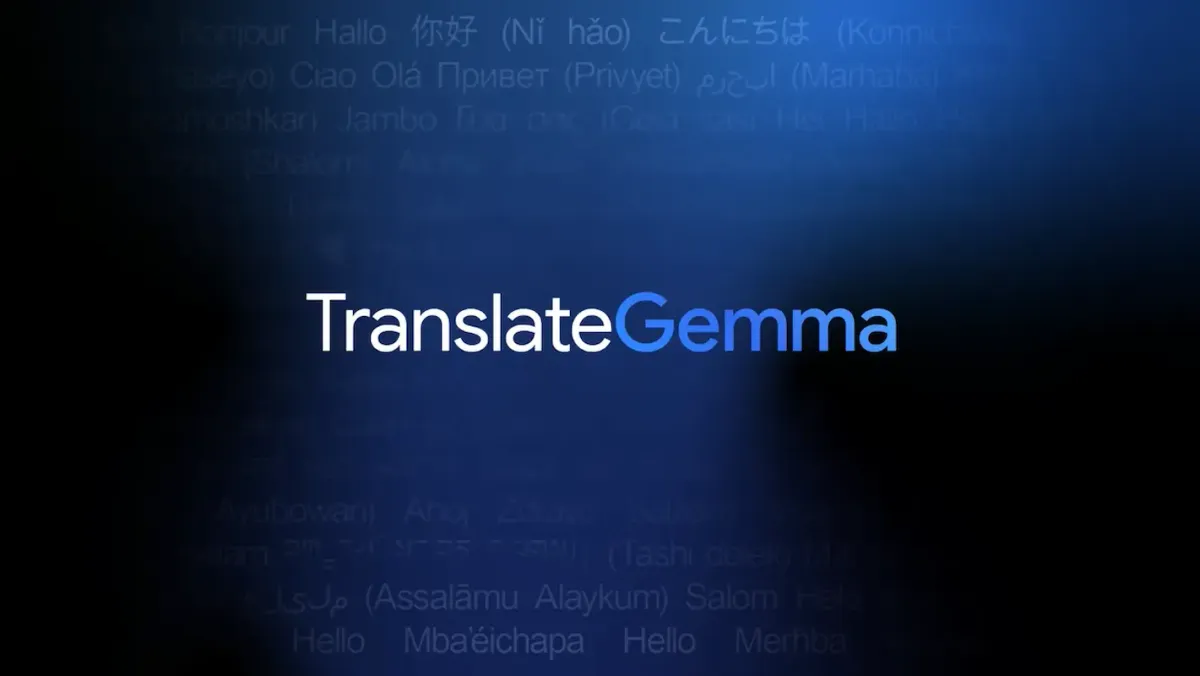
Google is aiming to fix this with its latest release: TranslateGemma.
What is TranslateGemma?
TranslateGemma is a new family of “open” AI models designed specifically for high-quality translation. It is built on top of Gemma 2, Google’s powerful and lightweight AI technology.
Unlike older translation tools that were built solely to swap words from one language to another, TranslateGemma is designed to understand the nuance, style, and context of what is being said.
Does it support all languages?
Not quite. The model has been rigorously tested and optimized for 55 global languages. Instead of trying to do everything at once, TranslateGemma focuses on doing a specific set of languages exceptionally well.
- The “Global Greats”: The model is optimized for English and about 50+ major languages. This includes high-resource languages like Spanish, French, and Mandarin, as well as medium and “low-resource” languages such as Swahili, Hebrew, and Icelandic.
- The “English Bridge”: It is specifically designed for “English-to-Many” and “Many-to-English” translations. This makes it a powerful tool for global business, research, and technical documentation where English is often the common link.
- A Foundation for More: Because it is an open model, developers in different countries can take this “base” and train it to learn “low-resource” languages (languages with less data available online) in the future.
Why is this a big deal?
Standard translation tools often struggle with long-form content and maintaining a consistent tone. TranslateGemma stands out because:
- It handles long text better: Instead of getting confused by long articles, it keeps the flow steady from start to finish.
- It understands “style”: If you are translating a creative story, it tries to keep the poetic feel. If you are translating a technical manual, it stays precise.
- It’s “Open”: This means researchers all over the world can access it, study it, and build their own specialized tools.
How does it work? (The Simple Version)
Most translation AIs are trained simply on pairs of sentences. TranslateGemma takes a more sophisticated approach called “Monolingual-to-Multilingual” training.
Essentially, it was trained to be an expert in individual languages first, and then it was taught how to “bridge” them. This helps the AI understand unique grammar and cultural expressions before it even tries to translate them.
Why this matters for the future
As the world becomes more connected, the need for tools that don’t just “translate” but actually “communicate” is growing.
Whether it is a student trying to access research papers in another language or a developer building a multilingual app, TranslateGemma represents a step toward a world where language is no longer a wall, but a bridge.
Source: Google Blog
Frequently Asked Questions