Is Monosodium Glutamate (MSG) a Carcinogen? The Truth About Cancer Risks

 English
 Russian
 Español
 Français
 Deutsch
 हिन्दी
 සිංහල
සිංහල 中文
中文 日本語
日本語
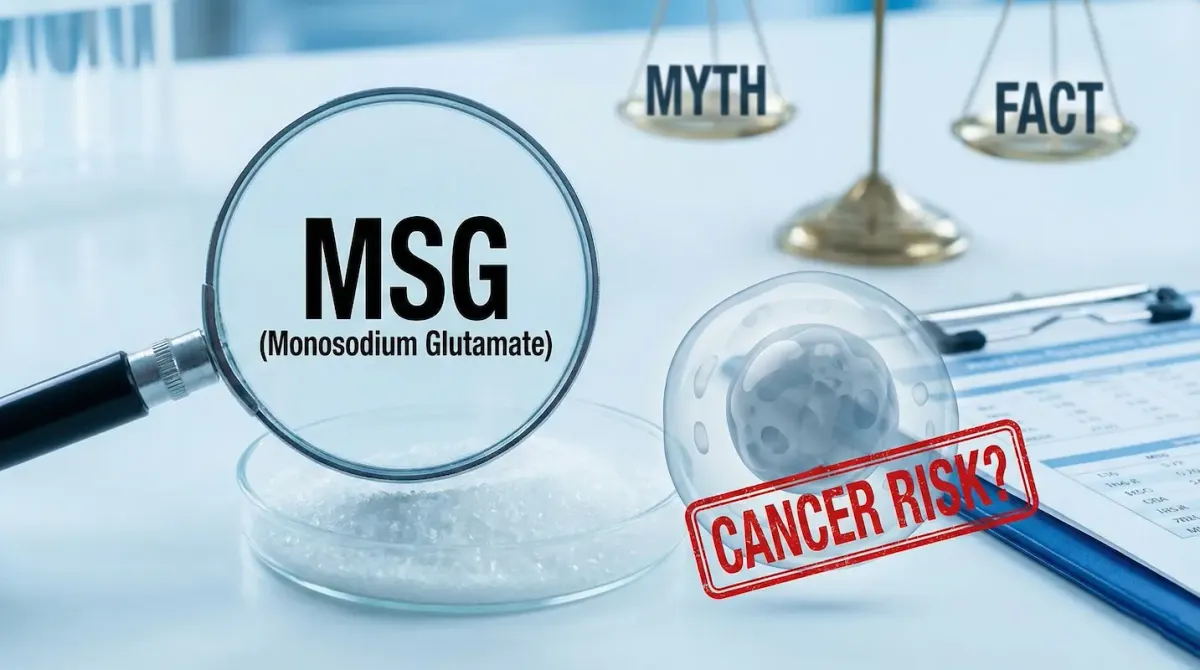
Monosodium Glutamate, commonly known as MSG, is one of the most controversial ingredients in the food world. For decades, people have avoided it, believing it causes everything from headaches to serious long-term diseases. One of the most frightening questions people ask is whether MSG is a carcinogen (a substance that causes cancer).
The short answer, based on decades of scientific research, is no. There is no credible evidence to suggest that consuming MSG in food causes cancer in humans.
In this article, we will look at what science actually says about MSG, why the myths started, and whether you truly need to avoid it.
What Is Monosodium Glutamate?
Before analyzing the risks, it helps to understand what MSG actually is. It is simply the sodium salt of glutamic acid. Glutamic acid is a common amino acid found naturally in our bodies and in many foods we consider healthy.
When you eat a tomato, a piece of Parmesan cheese, or a mushroom, you are eating glutamate. MSG is chemically indistinguishable from these natural sources. The powder used in cooking is usually made by fermenting starch, sugar beets, or sugar cane, a process very similar to how yogurt or vinegar is made.
The Cancer Question: What the Studies Say
Health organizations around the world have studied MSG extensively for over 40 years. This includes the U.S. Food and Drug Administration (FDA), the World Health Organization (WHO), and the European Food Safety Authority (EFSA).
None of these major regulatory bodies classify MSG as a carcinogen. In fact, the FDA has classified MSG as "Generally Recognized as Safe" (GRAS). This is the same safety category used for ingredients like sugar, baking soda, and pepper.
Researchers have conducted animal studies where rats were fed large amounts of MSG over long periods. These studies have consistently failed to show that MSG causes tumors or cancer. The body breaks down MSG into sodium and glutamate. The sodium is used for hydration and blood pressure regulation, and the glutamate is used as fuel for the gut or for making proteins. Because the body processes it so efficiently, it does not linger in the body to cause toxic damage.
Why Do People Think It Is Dangerous?
The fear of MSG can be traced back to a letter published in a medical journal in 1968. A doctor described feeling heart palpitations and weakness after eating at Chinese restaurants. He called it "Chinese Restaurant Syndrome."
This anecdotal report sparked a media frenzy. Suddenly, people began blaming MSG for a wide variety of health issues without real evidence. Later, some poorly designed studies injected massive doses of MSG directly into the brains of newborn mice, causing damage. However, eating MSG in soup is very different from injecting it into a brain. Science has since proven that dietary glutamate does not even cross the "blood-brain barrier" in significant amounts.
Are There Any Real Side Effects?
While MSG does not cause cancer, it can cause mild symptoms in a small group of people. This is similar to how some people are sensitive to lactose or gluten.
A small percentage of the population may experience short-term symptoms if they eat a massive amount of MSG on an empty stomach. These symptoms can include a headache, flushing of the skin, or mild sweating. However, these effects are temporary and usually pass within an hour. They are not related to cancer or cell damage.
Conclusion
If you see "Monosodium Glutamate" on a label, you do not need to panic. It is a flavor enhancer that makes savory foods taste better (a taste known as "Umami").
Leading health organizations agree that it is safe to consume. It does not damage your DNA, and it is not a carcinogen. While you should limit it if you are personally sensitive to it, or if you are watching your sodium intake, there is no scientific reason to fear it as a cause of cancer.
Source - fda.gov , mayoclinic.org , who.int
Frequently Asked Questions