Avatar: Fire and Ash – The Filmmaking Techniques Rewriting Cinema

 English
 Russian
 Español
 Français
 Deutsch
 हिन्दी
 සිංහල
සිංහල 中文
中文 日本語
日本語
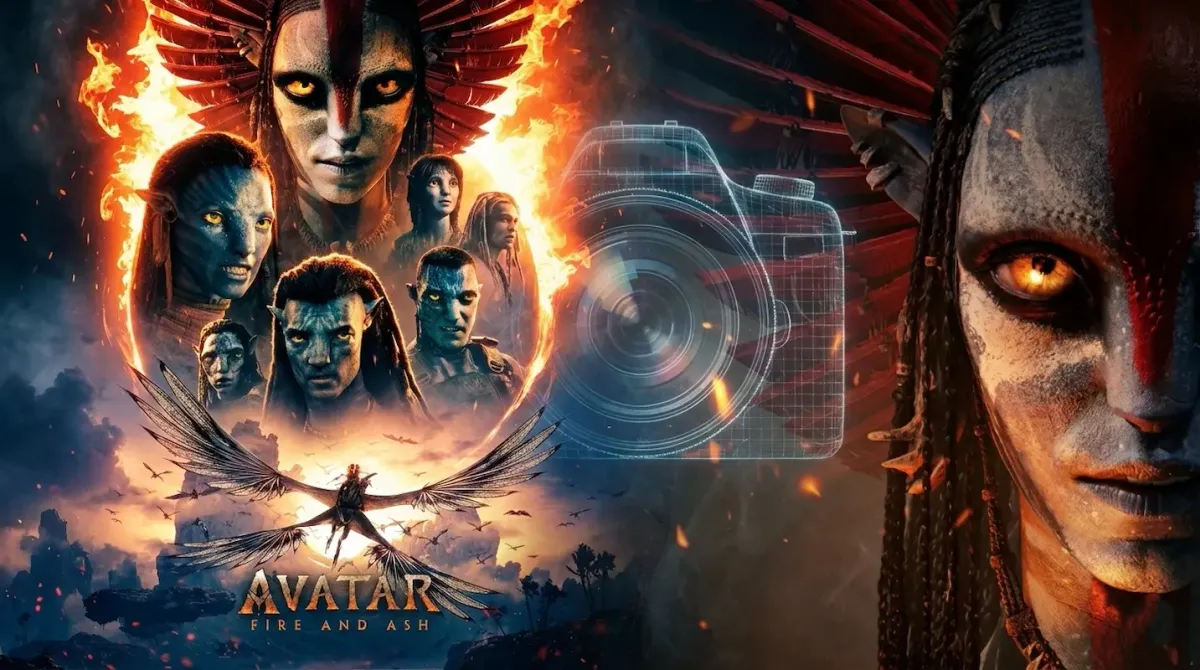
When James Cameron releases a movie, it is rarely just a film release. It is usually a technology demonstration. The original Avatar (2009) reintroduced the world to 3D and performance capture. Avatar: The Way of Water (2022) solved the incredibly complex physics of water simulation. Now, with Avatar: Fire and Ash, Cameron and his team at Wētā FX are tackling a new set of elemental challenges.
This third installment shifts the setting from the oceans to volcanic regions and introduces the "Ash People." This change in biome required a complete overhaul of the visual effects pipeline. Water is heavy and reflective, but fire is gaseous, emissive, and chaotic. To bring this vision to life, the production team has utilized ground-breaking advancements in neural networks, fluid dynamics, and 3D capture. Here are the specific filmmaking techniques defining the look of Avatar: Fire and Ash.
Neural Network Facial Capture
The most significant leap in Fire and Ash is how the actors' performances are translated to their digital avatars. In previous films, animators used a system that isolated specific parts of the face, such as the eyes, the mouth, and the brow, and manipulated them individually. While effective, it sometimes missed the subtle ways facial muscles pull on each other.
For this new film, Wētā FX has implemented a neural network-based facial system. This machine-learning tool does not generate the performance, as it is not AI art. Rather, it interprets the data from the actors' head-rig cameras with unprecedented accuracy. It understands muscle interconnectivity. If an actor clenches their jaw, the system knows exactly how the skin on their temple should move. This technology was specifically rolled out to capture the performance of Oona Chaplin, who plays Varang, the leader of the Ash People. The result is a digital character that conveys micro-expressions of anger and malice that previous tech could not handle.
Mastering the Physics of Fire and Ash
In The Way of Water, the challenge was water volume and surface tension. In Fire and Ash, the challenge is chemiluminescence and volumetric smoke. The team had to build new physics solvers to simulate how fire behaves in an alien atmosphere.
Unlike standard CGI fire, which is often just a 2D element pasted into a scene, the fire in this film is a light source. The "Ash People" live in a darkened, smog-heavy environment lit by magma and flame. This required advanced ray-tracing techniques to calculate how light moves through thick, hazy air (volumetric lighting). The software tracks real chemical properties like fuel, oxygen, and temperature to simulate the combustion reaction. This ensures that when a fire burns, the smoke swirls, expands, and dissipates exactly as it would in real physics, interacting with the characters' skin and clothing in real-time.
Refined High Frame Rate (HFR) 3D
James Cameron remains one of the few directors committed to High Frame Rate (HFR) cinema. Standard movies are shot at 24 frames per second (fps), which can cause motion blur during fast action scenes. Fire and Ash utilizes a variable frame rate, switching between 24fps for dialogue scenes and 48fps for action sequences.
However, the technique has been refined since The Way of Water. Critics of the previous film noted that the "soap opera effect" (where movement looks too smooth and fake) was distracting. For Fire and Ash, the grading process has been adjusted to make the transitions between frame rates less jarring. This ensures that the frenetic battles of the Ash People remain crisp and easy to follow in 3D without losing the cinematic "weight" of the quieter, character-driven moments.
The Evolution of the Virtual Camera
The "Volume" is the empty stage where actors perform in motion capture suits, and it is where the movie is actually shot. Cameron uses a Virtual Camera, a monitor that allows him to see the actors as their blue Na'vi counterparts in real-time against a digital background.
For Fire and Ash, this virtual production pipeline has become nearly photorealistic. In the past, the director saw a low-resolution "video game" version of the scene. Now, thanks to increases in processing power, Cameron can see lighting, shadows, and textures that are much closer to the final image while he is still on set. This allows for better decision-making regarding camera angles and lighting setups, reducing the amount of guesswork left for the post-production team.
Conclusion
Avatar: Fire and Ash is proving once again that James Cameron is as much an engineer as he is a storyteller. By leveraging neural networks to perfect human emotion and building new physics engines to simulate the chaos of fire, the franchise continues to blur the line between live-action and animation.
For the audience, these technical terms translate into a simple feeling: immersion. When you watch the Ash People move through the smoke, you are not watching a special effect. You are watching a new reality, built one pixel at a time by the most advanced filmmaking techniques in history.
Source - thewrap.com , alexey.stomakhin.com , slate.com
Frequently Asked Questions