What Is llms.txt? The Complete Guide to Structure and Purpose (2026)
Learn what llms.txt is, how it works, and how to structure it for AI SEO. Complete 2026 guide to improving AI visibility and discoverability.

 English
 Russian
 Español
 Français
 Deutsch
 हिन्दी
 සිංහල
සිංහල 中文
中文 日本語
日本語
As artificial intelligence becomes the primary way people search for information, website optimization is evolving. Traditional files like robots.txt and sitemap.xml were designed to guide search engine crawlers such as Googlebot. However, modern AI systems and large language models require a different kind of guidance.
This is where llms.txt comes in.
The llms.txt file is a lightweight text document placed in the root directory of a website. Its purpose is simple: help AI systems quickly understand your site’s most important content without processing unnecessary HTML clutter.
In 2026, llms.txt is emerging as a critical tool for websites that want visibility in AI-generated answers and conversational search systems.
Why Modern Websites Are Difficult for AI to Read
Modern websites are built for human experience. They include dynamic menus, scripts, advertisements, tracking code, styling layers, and interactive elements. Humans can visually ignore distractions and focus on the core content.
Artificial intelligence systems read the raw underlying code. This means they must process:
- Navigation structures
- JavaScript files
- CSS styling
- Hidden metadata
- Embedded widgets
Large language models also operate within memory limits known as context windows. If too much memory is consumed parsing unnecessary layout code, the model may not fully process the actual article or documentation.
This creates inefficiency and reduces the likelihood that your content will be accurately cited or summarized by AI tools.
What Is llms.txt and How It Works
The llms.txt file solves this problem by acting as a clean directory map for AI systems.
It is written in Markdown format, which removes unnecessary code and keeps only structured text and links. When an AI crawler visits your website, it can check the root directory for /llms.txt and use it as a trusted content index.
Instead of scanning your entire website blindly, the AI can immediately understand:
- What your site is about
- Which pages are most important
- Where high-quality documentation exists
This improves efficiency and increases the chance your content appears in AI-generated summaries.
llms.txt vs llms-full.txt
There are two related but different file types.
The standard llms.txt file is an index. It acts like a table of contents and contains links to important pages.
The llms-full.txt file is a complete text export of your entire website. It contains all content in one large Markdown document.
The difference is simple:
- llms.txt guides the AI where to look.
- llms-full.txt provides everything at once.
Most websites only need the standard llms.txt file. The full version is typically used for developer documentation or structured data ingestion.
Standard Structure of an llms.txt File
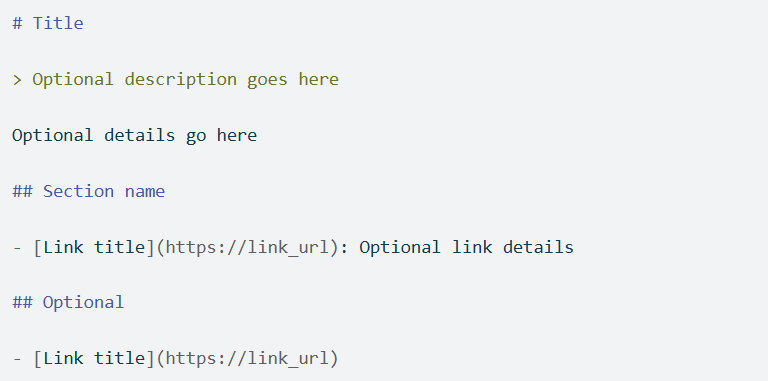
To follow the emerging standard, the file must use proper Markdown formatting. It should contain the following structure.
The file begins with a single H1 heading that represents your website or project name.
Next, a blockquote summary briefly explains what the site does.
After that, optional context paragraphs may provide additional details about your organization.
Finally, organized link sections are created using H2 headings. Under each heading, include bullet-point links to key pages, each followed by a short description.
A simplified structural example would look like this:
How to Create and Implement llms.txt
Creating an llms.txt file requires no special tools. You can use any basic text editor and save the file as "llms.txt".
Steps to implement:
- Write your structured Markdown content.
- Save the file as llms.txt
- Upload it to your website’s root directory.
- Confirm accessibility by visiting:
https://neovise.me/llms.txt
For large websites, automation tools and plugins are available that can generate the file dynamically.
Why llms.txt Matters for SEO in 2026
Search behavior is shifting from traditional keyword searches to AI-powered conversational queries.
When AI models generate answers, they rely on structured, accessible content sources. Websites that implement llms.txt provide:
- Clear content hierarchy
- Reduced parsing complexity
- Improved AI discoverability
- Higher likelihood of citation
For content creators and businesses, this is a strategic SEO move. As AI-driven search expands, structured AI-friendly indexing will become as important as sitemap optimization once was.
Final Thoughts
The llms.txt file represents the next evolution of technical SEO. It is a simple, low-effort addition that significantly improves how artificial intelligence systems understand your website.
As AI assistants increasingly replace traditional search interfaces, structured AI indexing will separate visible websites from invisible ones.
Implementing llms.txt today positions your content for the future of search.
Source - llmstxt.org , firecrawl.dev
Frequently Asked Questions