
 English
 Russian
 Español
 Français
 Deutsch
 हिन्दी
 සිංහල
සිංහල 中文
中文 日本語
日本語
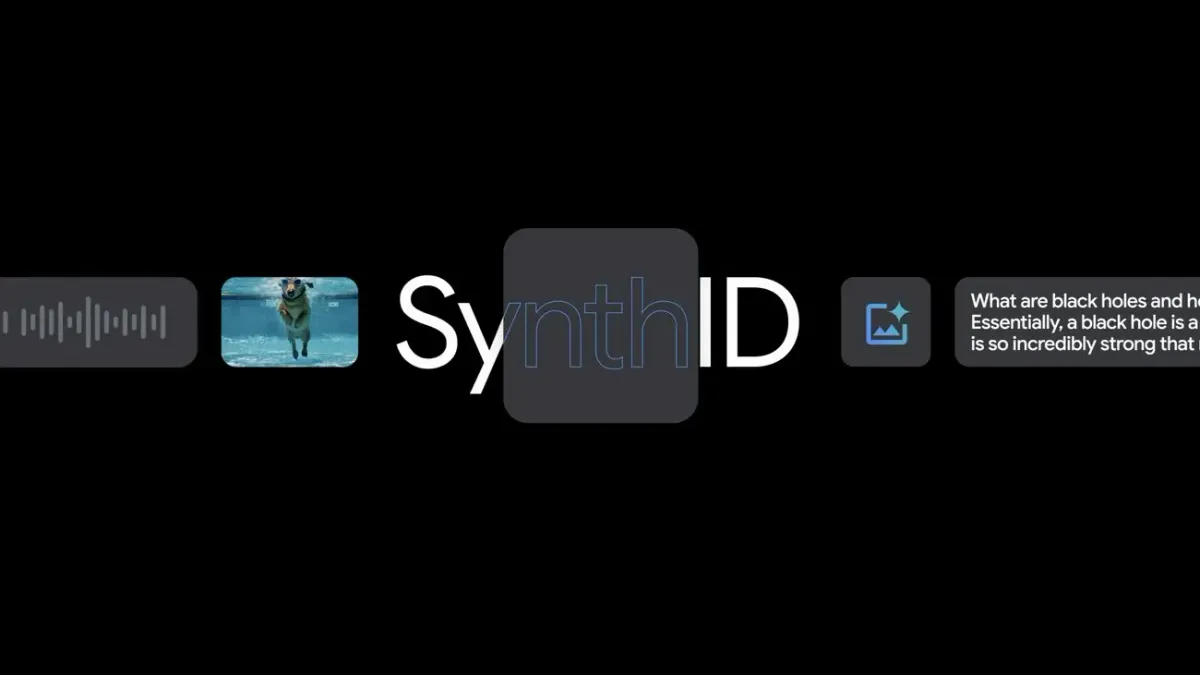
In the age of AI, it is becoming impossible to tell what is real. Deepfake images look like photos, and AI-written essays pass school exams.
To solve this, Google DeepMind created SynthID.
Launched initially for images and now available for text, audio, and video, SynthID is a digital watermarking technology. It embeds a hidden "signature" inside AI-generated content. You cannot see it, hear it, or delete it easily, but a computer can detect it instantly.
In this article, we will explain exactly what SynthID is and the fascinating science behind how it works without ruining the quality of your content.
What is SynthID?
credits: Google DeepMind
SynthID is an invisible watermarking tool designed by Google DeepMind. Its goal is to create a permanent record of provenance (origin) for AI media.
Unlike a traditional watermark (like a logo stamped in the corner of a photo), SynthID is embedded directly into the data of the file.
- For Humans: The content looks and sounds exactly the same.
- For Computers: The file contains a mathematical pattern that says, "This was created by Google AI."
It is currently used in Google's most advanced models, including Gemini 3, Nano Banana Pro (Imagen 3), and Veo (Video).
How It Works: The "Magic" Behind the Scenes
SynthID works differently depending on whether it is protecting text or images. Here is the simple explanation of the complex technology.
1. Text Watermarking (The "Logits" Trick)
When an AI like Gemini writes a sentence, it predicts the next word (token) based on probability.
- Example: If I type "My favorite fruit is...", the AI might list "Apple" (50%), "Banana" (30%), or "Mango" (20%).
- What SynthID Does: It adds a subtle mathematical bias to these choices using a secret key. It might force the AI to pick "Banana" instead of "Apple" if "Banana" fits the secret watermark pattern.
- The Result: The sentence still makes perfect sense to you, but the specific sequence of words creates a statistical pattern that Google's detector can read.
2. Image Watermarking (Pixel Manipulation)
For images, SynthID uses two neural networks.
- The Embedder: It scans the image and slightly changes the color values of specific pixels. These changes are so tiny that the human eye cannot see them.
- The Robustness: Even if you crop the photo, put a filter on it, or take a screenshot, the watermark usually survives because it is spread across the entire image structure, not just one corner.
Why Is SynthID Important?
As we move into late 2025, misinformation is a major global risk. SynthID solves three big problems:
1. Fighting Deepfakes
If someone creates a fake video of a politician using Google Veo, news agencies can use the SynthID detector to prove it is fake within seconds.
2. Copyright & Trust
Creators want to know if a viral article was written by a human or a bot. SynthID allows platforms to automatically label AI content (like the "AI Generated" tag you see on YouTube).
3. It is Open Source
In a huge move, Google recently open-sourced the text version of SynthID. This means other companies (not just Google) can now use this technology to protect their own AI models for free.
Is It Foolproof?
No watermarking technology is 100% perfect.
- The Challenge: If you take an AI text and rewrite it heavily or translate it into another language, the "statistical pattern" of the tokens gets broken.
- The Defense: However, for images and audio, SynthID is incredibly strong. Tests show it can survive JPEG compression, resizing, and even MP3 conversion.
Conclusion
SynthID is the "digital fingerprint" for the AI era. It allows us to enjoy the power of tools like Gemini 3 while maintaining a safety net against deception.
As AI gets better at mimicking reality, tools like SynthID are the only way we will be able to trust what we see and read online.
Source - deepmind.google , blog.google , huggingface.co
Frequently Asked Questions