What Is Ambient Computing? Explained Simply
Learn exactly what ambient computing is, how it differs from the Internet of Things, and how invisible technology is changing our homes and workplaces in 2026.

 English
 Russian
 Español
 Français
 Deutsch
 हिन्दी
 සිංහල
සිංහල 中文
中文 日本語
日本語
For many years, using a computer meant sitting in front of a screen and interacting with a keyboard or mouse. Every action required direct input. If you wanted to play music, you had to open an app and press play. If you wanted to adjust your home temperature, you had to physically turn a thermostat dial.
Today, technology is evolving beyond that traditional model. Instead of computers being separate devices, they are becoming part of the environment around us. This shift is known as ambient computing.
In this guide, we will explain what ambient computing means, how it works behind the scenes, and why it is becoming one of the most important trends shaping modern technology.
The Meaning of Ambient Computing
The word ambient describes something that surrounds you, like the air in a room or background sounds in a café. In technology, ambient computing refers to digital systems that exist quietly in the environment and work automatically without requiring constant interaction.
The goal of ambient computing is to make technology feel almost invisible. Instead of opening apps and pressing buttons, the environment itself understands what you need and responds automatically.
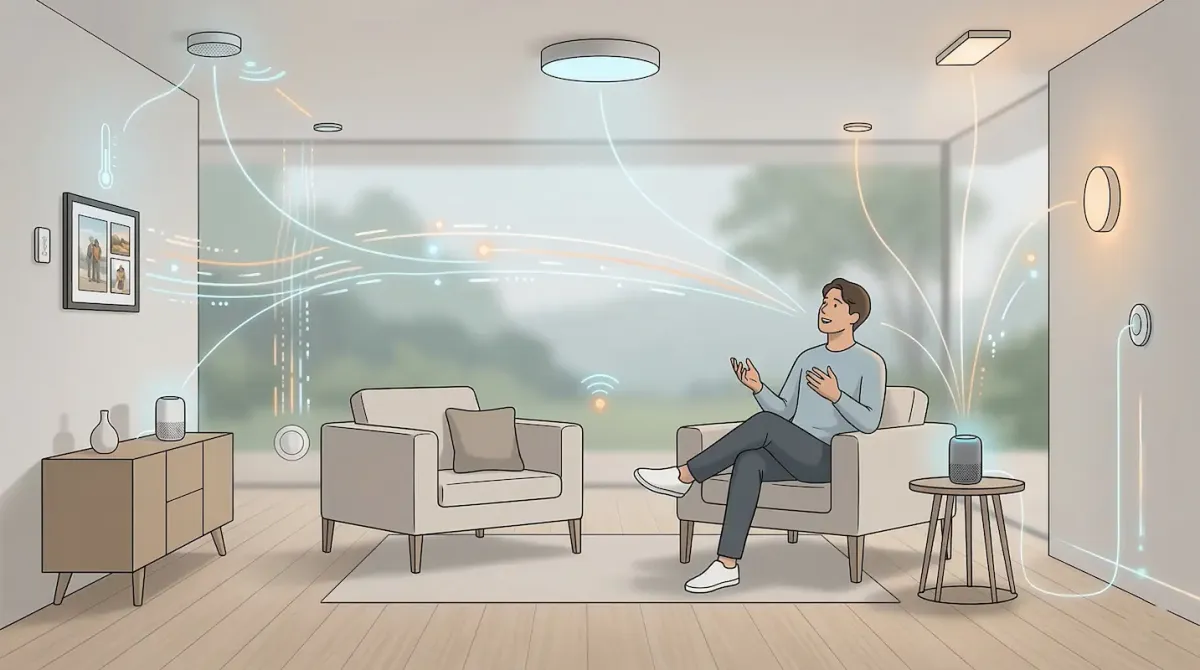
For example, imagine entering your living room and the lights turn on automatically, your favorite music begins playing, and the room temperature adjusts to your comfort level. You did not need to manually control anything. The system simply recognized your presence and responded.
This approach represents a shift from active computing, where users control devices directly, to proactive computing, where technology anticipates user needs.
Ambient Computing vs. the Internet of Things
Ambient computing is often confused with the Internet of Things (IoT), but they are not the same concept.
The Internet of Things refers to the physical devices connected to the internet. These devices include items such as:
- Smart thermostats
- Wi-Fi enabled light bulbs
- Home security cameras
- Smart refrigerators
These devices collect data and can be controlled remotely.
Ambient computing, however, goes a step further. It combines IoT devices with artificial intelligence to create a seamless and intelligent environment.
Think of it this way:
- IoT devices are the hardware components.
- Ambient computing is the intelligent system that connects those devices and makes them work together automatically.
For instance, controlling your thermostat using a mobile app is simply IoT. But if the thermostat automatically adjusts the temperature based on your schedule, weather conditions, and whether you are home, that experience becomes ambient computing.
How Ambient Computing Works
Although ambient computing appears simple from a user perspective, it relies on several layers of advanced technology working together. Most systems operate through three main stages.
First, the environment collects data using sensors. These sensors act like the system’s eyes and ears. Examples include motion sensors, microphones, temperature sensors, and wearable health monitors. They continuously gather information about what is happening around them.
Second, the collected data is processed using artificial intelligence. The AI analyzes patterns, learns user behavior, and decides whether an action should be triggered. For example, if motion is detected in the kitchen every morning at the same time, the system may learn that this is part of your daily routine.
Third, the system performs an action using connected devices or actuators. Once the AI determines what should happen, it sends commands to devices such as smart lights, coffee makers, thermostats, or speakers.
This entire process happens within seconds, often without the user even noticing the technology working in the background.
Real World Examples of Ambient Computing
Ambient computing is not just a futuristic idea. Many technologies already use these principles today.
Smart homes are one of the most common examples. Devices like Amazon Alexa or Google Nest can control lighting, music, and temperature using voice commands or automated routines. Over time, these systems learn user preferences and adapt accordingly.
Wearable technology also demonstrates ambient computing. Smartwatches and fitness trackers constantly monitor health metrics such as heart rate, sleep patterns, and activity levels. If unusual health signals are detected, the device can alert the user or recommend actions like relaxation exercises.
In modern workplaces, ambient computing is being used to improve productivity. Meeting rooms equipped with smart sensors can detect when employees enter the room, automatically turn on displays, connect video conferencing software, and adjust lighting or temperature.
These examples show how ambient computing can simplify daily interactions with technology.
Benefits of Ambient Computing
One of the biggest advantages of ambient computing is convenience. By reducing the need to manually control devices, technology becomes easier and faster to use.
Another major benefit is energy efficiency. Smart systems can automatically adjust lighting, heating, and cooling based on occupancy. For example, if a room is empty, the system can turn off lights and reduce energy usage.
Ambient computing also improves accessibility. Voice commands and automated systems can help individuals with disabilities or elderly users interact with technology more easily without relying on complicated interfaces.
As these systems continue to improve, they will make everyday environments smarter, safer, and more responsive.
Privacy and Security Concerns
Despite its advantages, ambient computing also raises important privacy concerns. For the technology to work effectively, many systems must constantly collect data through microphones, sensors, and connected devices. This means that personal environments may be continuously monitored.
Because of this, companies developing ambient computing systems must ensure that user data is protected through strong encryption, secure processing, and transparent privacy policies. Many modern devices are designed to process sensitive data locally rather than sending everything to cloud servers. This approach helps reduce privacy risks while still allowing intelligent automation.
Balancing convenience with privacy protection remains one of the biggest challenges in the future of ambient technology.
Conclusion
Ambient computing represents a major transformation in how humans interact with technology. Instead of constantly operating devices through screens and buttons, computers are becoming part of the environment itself. By combining sensors, artificial intelligence, and connected devices, ambient computing allows technology to understand context, anticipate needs, and act automatically.
As hardware becomes more advanced and artificial intelligence continues to evolve, ambient computing will likely become an even larger part of everyday life. In the future, technology may truly disappear into the background, leaving us with environments that quietly support and enhance our daily activities.
Sources - microsoft.com, thoughtworks.com, hp.com
Frequently Asked Questions