What Are Programs, Processes, and Threads? A Complete Beginner Guide
Learn the exact difference between programs, processes, and threads. This simple guide explains how your computer operating system manages and runs software.

 English
 Russian
 Español
 Français
 Deutsch
 हिन्दी
 සිංහල
සිංහල 中文
中文 日本語
日本語
Have you ever wondered how your computer can play music, download files, and let you type documents all at the same time without slowing down? To most people, this feels like magic. However, behind the scenes, your operating system is carefully organizing every task using well-defined concepts.
To truly understand how computers manage multiple tasks, you need to learn three fundamental ideas: programs, processes, and threads. Although these terms are often used as if they mean the same thing, they actually describe completely different stages of how software works.
In this detailed guide, you will learn what each of these terms means, how they are connected, and how they work together to make modern computing possible.
What Is a Program?
A program is the starting point of all software. It is simply a set of instructions written by a developer that tells the computer what to do.
When you install an application on your computer, such as a browser, game, or text editor, you are installing a program. At this stage, the program is completely inactive. It is just a file stored on your hard drive or SSD.
Think of a program like a cookbook sitting on a shelf. The cookbook contains all the instructions needed to prepare a meal, but it does nothing on its own. It only becomes useful when someone opens it and starts following the instructions.
Similarly, a program only becomes active when you open or run it. Until then, it remains passive and does not consume system resources.
What Is a Process?
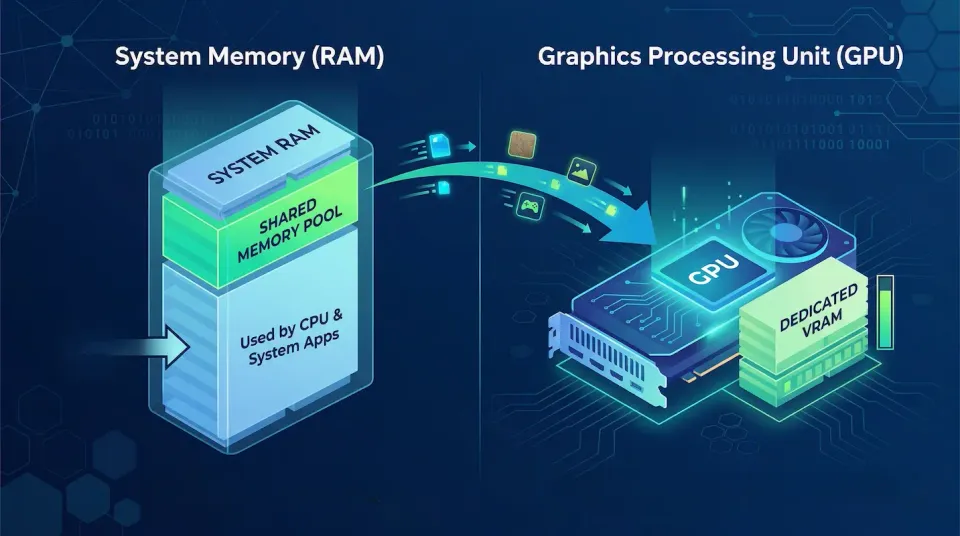
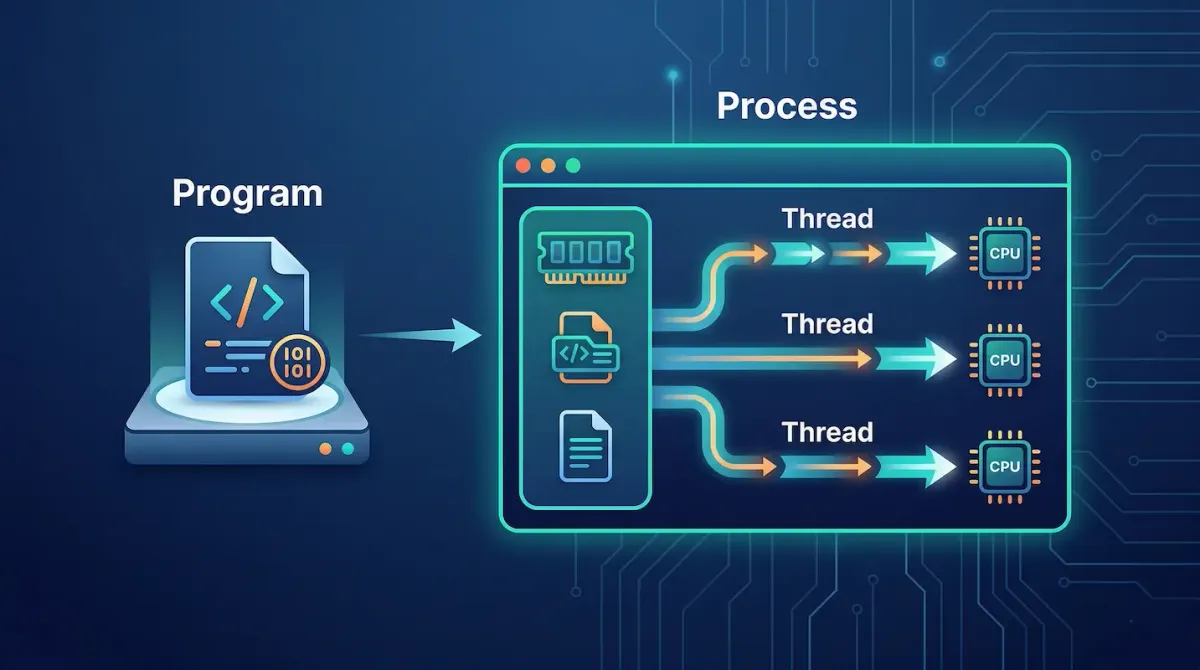
A process is what happens when a program is executed. When you double-click an application, your operating system loads the program from storage into RAM and begins executing its instructions. At that moment, the program becomes a process.
A process is much more than just code. It includes everything required for execution, such as memory allocation, system resources, file access, and security permissions.
One of the most important features of a process is isolation. Each process runs in its own protected memory space. This means one process cannot directly interfere with another.
For example, if your web browser crashes, it does not crash your music player or other running applications. This isolation is essential for system stability and security.
What Is a Thread?
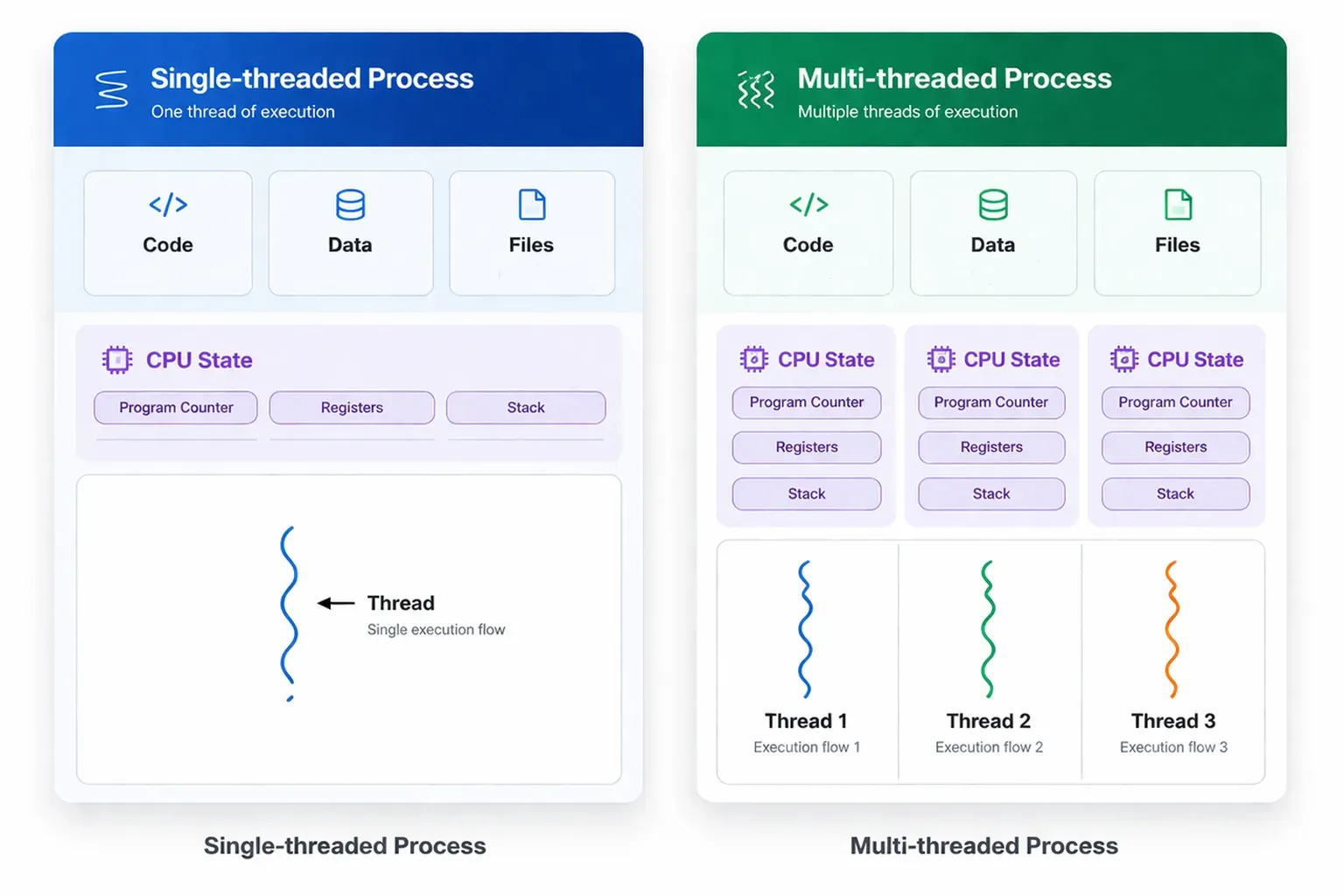
A thread is the smallest unit of execution within a process. Every process must have at least one thread, known as the main thread. However, most modern applications create multiple threads to perform tasks more efficiently.
Threads allow a process to divide work into smaller tasks that can run simultaneously. This is especially important in modern multi-core processors, where multiple tasks can be processed in parallel.
Imagine a kitchen where a chef is preparing a meal. Instead of doing everything alone, the chef assigns tasks to assistants. One person chops vegetables, another cooks, and another prepares the sauce.
In this analogy:
- the program is the recipe
- the process is the kitchen
- the threads are the assistants doing the work
Because threads share the same memory space within a process, they can communicate very quickly. However, this also means that if one thread fails, it can affect the entire process.
Program vs Process: Key Differences
Understanding the difference between a program and a process is very important. A program is passive and stored on disk, while a process is active and running in memory. A program exists until it is deleted, while a process exists only while it is executing.
In simple terms, a program is like a blueprint, and a process is the actual construction happening in real time.
Process vs Thread: Key Differences
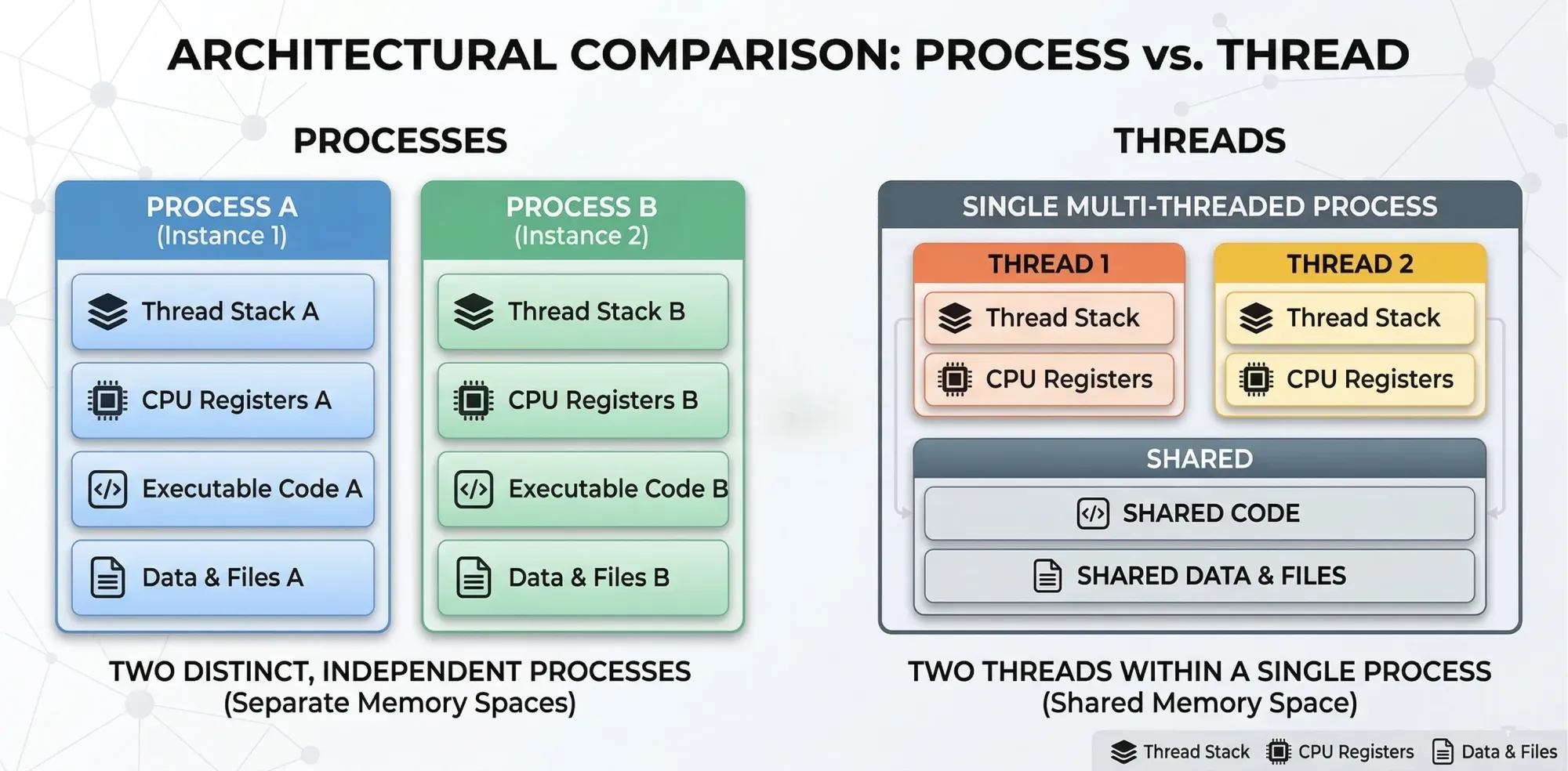
The difference between processes and threads is often confusing, but it becomes clear when you focus on how they operate. A process is heavy and requires its own memory space and resources. Creating a process takes time because the operating system must allocate memory and set up structures.
A thread is lightweight. It exists within a process and shares its memory. Creating a thread is faster and requires fewer resources.
Switching between processes is slower because the system must load different memory contexts. Switching between threads is faster because they already share the same environment.
Processes are isolated, making them safer. Threads are not isolated, making them faster but more vulnerable to errors.
How They Work Together
Programs, processes, and threads are not separate systems. They are different stages of the same workflow.
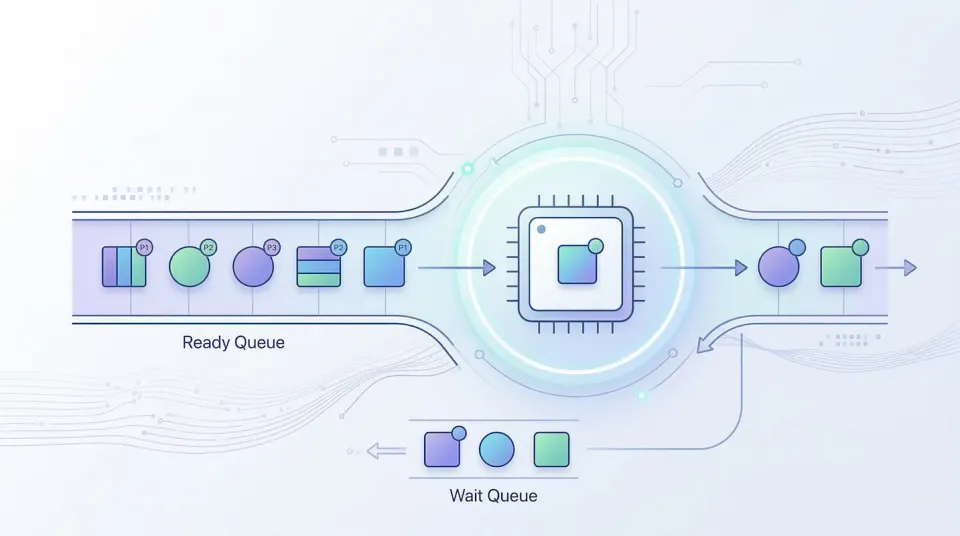
First, a program exists as a file on your storage device. When you run it, the operating system creates a process. Inside that process, threads are created to perform tasks efficiently.
This layered structure allows your computer to manage complex workloads without slowing down.
Real-World Example: Running a Video Game
Let’s look at a real-world example to make everything clearer. When you install a video game, it exists as a program stored on your disk. It does nothing until you launch it.
When you start the game, it becomes a process. The operating system loads it into memory and begins execution. Inside this process, multiple threads are created to handle different parts of the game. One thread manages graphics rendering, another handles sound, another processes user input, and another controls game logic.
All these threads work together to deliver a smooth and interactive gaming experience.
Why This Concept Matters
Understanding programs, processes, and threads is not just important for developers. It also helps everyday users understand how their computers work.
It explains why some applications use more resources, why multitasking is possible, and why systems sometimes slow down under heavy load.
For developers, these concepts are essential for building efficient and scalable applications. For users, they provide insight into performance and troubleshooting.
Conclusion
Programs, processes, and threads form the foundation of modern computing. A program is a passive set of instructions stored on disk. A process is an active instance of that program running in memory. A thread is the smallest unit of execution that performs actual work within a process.
By working together, these components allow computers to handle multiple tasks efficiently and provide the smooth experience we rely on every day.
Sources - geeksforgeeks.org, tutorialspoint.com, ibm.com
Frequently Asked Questions