
 English
 Russian
 Español
 Français
 Deutsch
 हिन्दी
 සිංහල
සිංහල 中文
中文 日本語
日本語

Today, we will delve into the world of NFC technology. Some of you may have heard of it, while for others, it might be a completely new topic. Interestingly, NFC might already be a part of your daily life perhaps in your hand, wallet, or purse. This article will explore what NFC is, how it works, and its practical applications.
What is NFC?
NFC, short for Near Field Communication, is a wireless communication technology that facilitates data exchange between devices. This exchange happens via radio waves, making it a convenient and efficient method for transferring information. While NFC technology is extensively used globally, its adoption in Sri Lanka is still quite limited.
The History of NFC
NFC can be considered the “big brother” of RFID (Radio Frequency Identification) technology, which was first introduced in 1983. The origins of NFC trace back to 2002 when Philips and Sony collaborated to obtain a patent for this technology. In 2003, NFC received approval under ISO and IEC standards, marking a significant milestone in its development.
In 2004, Nokia joined the efforts to promote NFC, releasing the Nokia 5140 the first phone to include an NFC shell. Since then, numerous companies have integrated NFC into their devices, making it a widely accepted technology for various applications.
How Does NFC Work?
At its core, NFC relies on electromagnetic induction to facilitate data transfer. Using magnetic coupling, NFC generates an electromagnetic field that creates a flow of electric current, enabling communication between devices. This process, while highly technical, occurs seamlessly and within fractions of a second, making NFC extremely user-friendly.

NFC operates at a frequency of 13.56 MHz and supports data transfer speeds ranging from 106 Kbps to 424 Kbps. One of its defining characteristics is its short-range functionality data transfer can only occur within a distance of 4 centimeters. While this might seem like a limitation compared to Bluetooth or Wi-Fi, NFC’s short-range is an intentional design choice to enhance security and prevent unauthorized access.
NFC devices fall into two main categories:
Active Devices: These devices, such as smartphones, require power to operate and emit radio waves to communicate with other devices.
Passive Devices: Examples include NFC tags or bank cards, which do not require power or emit radio waves. Instead, they rely on the active device for communication.
Modes of Operation
NFC technology supports three primary modes of operation, each tailored to specific use cases:
Reader/Writer Mode: Used to read data stored in NFC tags. For instance, an NFC-enabled smartphone can scan a tag embedded with a URL or product details.
Peer-to-Peer Mode: Allows two NFC-enabled devices to exchange files, such as photos or contacts, quickly and securely.
Card Emulation Mode: Used for contactless payments. In this mode, an NFC-enabled device or card emulates a traditional bank card, allowing it to interact with payment terminals.

Applications of NFC Technology
The applications of NFC are vast and varied, touching nearly every aspect of modern life. Globally, the technology is used to simplify tasks such as payments, ticketing, and access control.
Globally, NFC is used to streamline various tasks, with payments being one of its most prominent applications. For instance, if your bank card is NFC-enabled, you can complete transactions simply by tapping the card on a card reader. Such cards are usually marked with a symbol resembling ')))'.
Moreover, NFC-enabled smartphones allow users to link their bank cards and make payments directly via their devices. While global services like Google Pay support multiple cards, Sri Lanka is yet to adopt such platforms. However, some Sri Lankan banking apps now enable NFC-based transactions for specific accounts, making the technology more accessible.
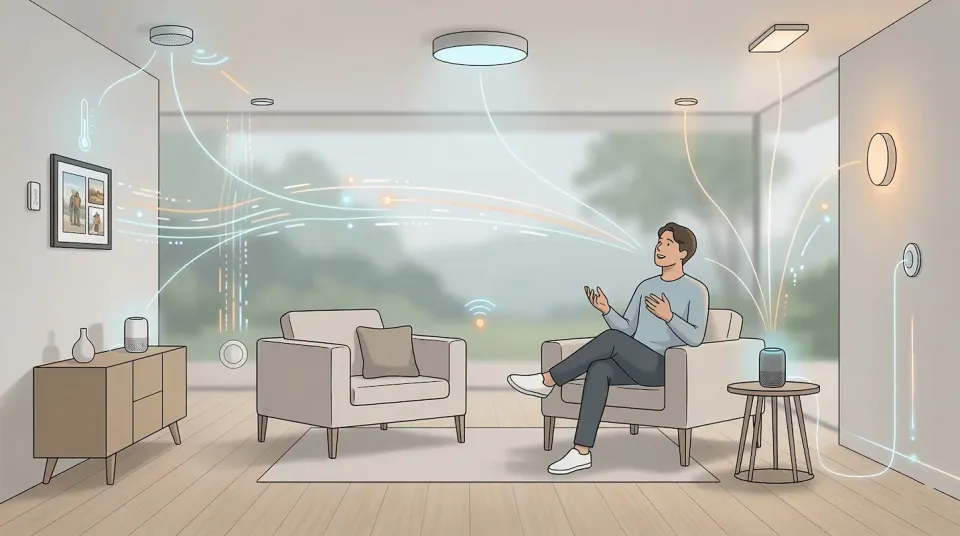
Beyond payments, NFC technology is utilized in numerous other areas, including NFC tags, door locks, and smart home devices, offering a wide range of possibilities for automation and security.
How Secure is NFC?

Security is a cornerstone of NFC technology, particularly in applications involving sensitive data such as financial transactions. To ensure the safety of data exchanges, NFC employs a combination of encryption methods and security mechanisms.
Key Security Mechanisms
Data Encoding: Before data is transferred, it is encrypted using secure keys and algorithms. This prevents unauthorized parties from intercepting or reading the information.
Key Exchange: During the transfer process, secure keys are exchanged between devices, allowing them to decrypt the data safely.
Authentication: Before initiating a transfer, devices authenticate each other to ensure they are authorized participants. Techniques such as mutual authentication and two-factor authentication (2FA) are commonly used.
Encryption Methods
NFC uses Symmetric Encryption and Asymmetric Encryption as two primary encryption methods
In Symmetric Encryption, A single key is used for both encryption and decryption. While efficient, this method requires a secure key exchange. NFC often uses the Advanced Encryption Standard (AES), which is highly secure and supports 128-bit, 192-bit, and 256-bit keys.
In Asymmetric Encryption, This method uses a pair of keys(public and private) for encryption and decryption. Though more secure, it is slower compared to symmetric encryption. Examples include RSA (Rivest-Shamir-Adleman) and ECC (Elliptic Curve Cryptography). RSA Offers robust security with keys ranging from 1024 to 4096 bits. It is widely used in financial and access control applications. ECC Provides similar security to RSA but uses shorter keys, making it more efficient. ECC is ideal for NFC applications requiring high speed and low computational power, such as mobile payments.
Challenges and Future Potential
Despite its many advantages, NFC technology faces challenges, particularly in countries like Sri Lanka where its adoption is still limited. Infrastructure and awareness play significant roles in the widespread acceptance of any technology. However, as global trends move toward contactless solutions NFC is expected to gain traction in more regions.
Looking ahead, NFC has the potential to revolutionize industries by offering faster, safer and more efficient ways to interact with technology. From enabling cashless societies to driving smart home innovations, the possibilities are endless.
Conclusion
NFC is a powerful technology that combines convenience, speed, and security. While its adoption in Sri Lanka is still in its early stages, its global applications demonstrate its potential to simplify and enhance everyday life. As with any technology, the responsibility for safe usage ultimately lies with the user. By understanding how NFC works and its security features, we can confidently embrace this innovation as a valuable tool for the future.
reference - wikipedia.org , androidauthority.com , nfc-forum.org , rfidlabel.com
Frequently Asked Questions