
 English
 Russian
 Español
 Français
 Deutsch
 हिन्दी
 සිංහල
සිංහල 中文
中文 日本語
日本語

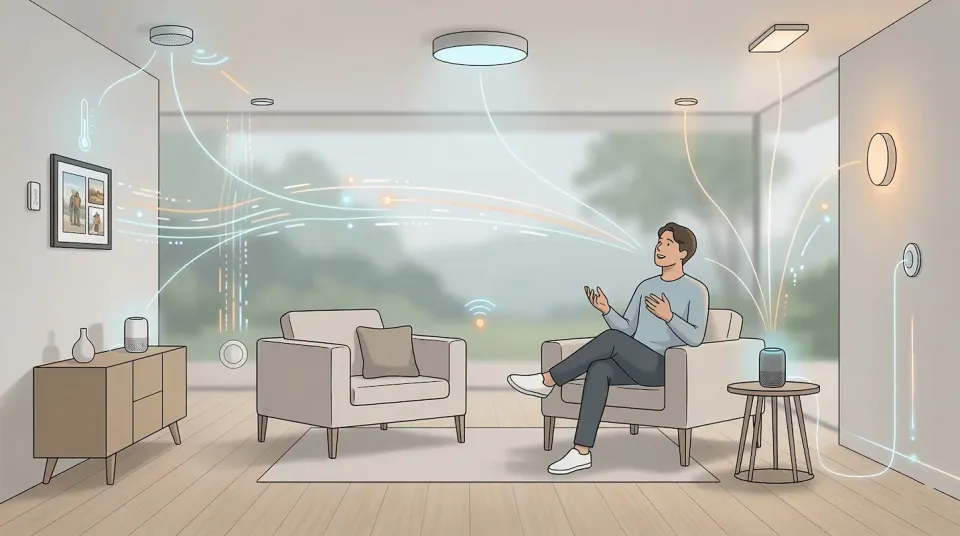
Imagine downloading an entire HD movie within seconds using nothing but a desk lamp. Sounds unbelievable, doesn’t it? Yet this futuristic idea has already become a reality. Today, we explore a groundbreaking technology that may soon illuminate every corner of our connected world. Li-Fi, short for Light Fidelity. In this article, we’ll uncover what Li-Fi really is, how it works, its strengths and limitations, and how it may shape the future of digital communication. This is not merely a concept of tomorrow but a transformative leap that could redefine how humanity interacts with information today.
Understanding the Electromagnetic Spectrum

Before diving into Li-Fi, it’s essential to understand the electromagnetic spectrum .the foundation upon which this technology is built. The electromagnetic spectrum represents the entire range of electromagnetic radiation, encompassing different types of waves that travel at the speed of light. These waves are composed of oscillating electric and magnetic fields, forming the invisible backbone of all wireless communication.
The spectrum includes gamma rays, X-rays, ultraviolet rays, visible light, infrared radiation, and radio waves. Each occupies a specific wavelength and frequency range, serving unique applications from medical imaging to satellite communication. For Li-Fi, the most relevant portions are visible light, infrared, and ultraviolet bands, as they enable the transmission of data using light instead of traditional radio frequencies. This shift from radio to light communication represents a paradigm change, allowing humanity to explore an entirely new layer of the spectrum for information exchange.
What is Li-Fi?
Li-Fi, or Light Fidelity, is a form of wireless communication technology that transmits data using light waves rather than radio waves, as used in Wi-Fi. Both Li-Fi and Wi-Fi serve the same purpose wireless data transmission, but they differ fundamentally in how they achieve it. While Wi-Fi relies on radio frequencies, Li-Fi operates through visible, infrared, or ultraviolet light. This means that ordinary LED light bulbs can act as transmitters for data, transforming every light source into a potential data access point.
Li-Fi technology first demonstration in 2011 during a TED Global Talk by Professor Harald Haas
Li-Fi technology was first demonstrated in 2011 during a TED Global Talk by Professor Harald Haas from the University of Edinburgh. However, its foundation Visible Light Communication (VLC) was being explored earlier in 2009 by the Fraunhofer Institute for Telecommunications in Germany. In that experiment, researchers successfully achieved 125 Mbps data transmission over a 5-meter distance using a white LED bulb. By 2010, using DMT modulation, they improved the speed to 513 Mbps. A decade later, in 2021, a study from the University of Oxford reported experimental Li-Fi data speeds reaching 224 Gbps, highlighting the massive potential of light-based communication. These milestones reveal the continuous evolution of Li-Fi and its potential to surpass existing wireless technologies.
How Does Li-Fi Work?

As mentioned earlier, Li-Fi uses light waves to transmit data. The process involves two main components: a transmitter and a receiver. A Li-Fi-enabled LED light bulb acts as the transmitter. It connects to the internet or a local network. Inside the bulb, a microchip modulates the light’s intensity at extremely high speeds encoding binary data (1s and 0s) into subtle light intensity modulations. These changes occur so rapidly that they’re invisible to the human eye, allowing normal illumination while data transmission takes place simultaneously.
On the receiving end, a photodetector captures the fluctuating light signals and converts them back into electrical data. Li-Fi is a bidirectional system, meaning data can be sent and received. For uplink communication (sending data back), devices often use infrared transmitters that modulate invisible IR light to communicate with the LED bulb. The LED bulb, equipped with a built-in sensor, decodes these IR signals to complete the two-way data exchange. Both the visible and infrared light components used in Li-Fi are harmless to the human eye, making the entire process seamless and silent.
Modern Li-Fi systems can even operate using infrared-only communication for both uplink and downlink, improving efficiency and avoiding visible light flicker issues. Researchers are now developing compact Li-Fi transceivers for smartphones, laptops, and IoT devices, which would make this technology practical for everyday use. When that happens, Li-Fi will no longer be confined to laboratories. It will enter homes, offices, and smart cities.
Advantages and Limitations of Li-Fi
Li-Fi provides several strengths that make it a revolutionary alternative to traditional wireless communication. Since light cannot pass through walls, Li-Fi signals remain confined within a room, ensuring an extremely secure connection. This feature makes it nearly impossible for unauthorized users outside the coverage area to intercept the signal. Moreover, as Li-Fi does not use radio frequencies, it operates without causing interference to sensitive equipment. Hence, it can be safely implemented in hospitals, aircraft, and laboratories, where electromagnetic interference could otherwise disrupt operations.
Another remarkable benefit is the enormous bandwidth potential. The visible light spectrum is ten thousand times larger than the radio spectrum, meaning Li-Fi offers vast untapped capacity for data transmission. Laboratory experiments have already achieved speeds in the hundreds of gigabits per second. Additionally, since Li-Fi systems can utilize existing LED lighting infrastructure, they bring energy efficiency by merging illumination and data transfer into a single system. Imagine walking into a room and instantly connecting to high-speed internet simply by turning on the lights—that is the promise of Li-Fi.
Despite these strengths, Li-Fi has certain drawbacks. One major limitation is its dependency on a direct line of sight between the transmitter and receiver. Any obstruction, even a human body or furniture, can interrupt the data flow. Furthermore, because light cannot penetrate walls, Li-Fi coverage is limited to a single room unless multiple access points are installed. Another challenge arises from interference caused by ambient light sources, such as sunlight, which can reduce signal accuracy in open spaces. Currently, the infrastructure for Li-Fi remains relatively expensive due to the need for specialized LED bulbs and sensors. Although the IEEE 802.11bb standard introduced in 2023 officially defined light-based wireless networking, global adoption is still in its early stages, and most consumer devices do not yet support this technology. Overcoming these limitations requires both technological innovation and commercial investment, but the progress so far gives reason for optimism.
Future Outlook and Conclusion
Li-Fi stands at the intersection of illumination and communication, redefining how we perceive connectivity. In the near future, every light source from street lamps to home bulbs could serve as a high-speed data hub, creating an interconnected environment driven by light. As 5G and IoT technologies evolve, Li-Fi may complement them by providing ultra-fast, secure, and localized communication, especially in places where radio signals are restricted or overloaded. Integrating Li-Fi with smart city infrastructure could enable intelligent traffic management, real-time data sharing, and energy-efficient communication systems.
Challenges such as high setup costs and line-of-sight dependency are expected to diminish with advancements in micro-LEDs, optical sensors, and AI-powered networking. As researchers continue to enhance modulation techniques and develop hybrid Wi-Fi/Li-Fi systems, the dream of a fully light-connected world moves closer to reality. In conclusion, Li-Fi is not merely an alternative to Wi-Fi it represents a brighter, faster, and safer future of digital communication a world where light itself becomes the medium through which we stay connected. The day may not be far when every beam of light around us becomes a carrier of knowledge, connecting humanity through the very essence of illumination.
Sources - wikipedia.org, greyb.com, lifi.co, oledcomm.net
Frequently Asked Questions