How to Reduce Screen Time for Your Child (2026 Parent Guide)
Learn how to reduce screen time for your child using 2026 pediatric guidelines. Practical tips for healthier digital habits and balanced technology use.


 English
 Russian
 Español
 Français
 Deutsch
 हिन्दी
 සිංහල
සිංහල 中文
中文 日本語
日本語

If you are a parent in 2026, screen time is probably one of your biggest concerns. Smartphones, tablets, gaming consoles, streaming platforms, and AI tools are now part of everyday childhood. While technology offers educational and creative benefits, excessive screen time can negatively impact sleep, physical health, emotional regulation, and academic performance.
According to the updated 2026 guidance from the American Academy of Pediatrics, the focus is no longer just about strict time limits. Instead, experts now emphasize content quality, emotional impact, and overall lifestyle balance.
This guide explains practical, research-backed strategies to help parents reduce unhealthy screen time and create healthier digital habits at home.
Understand the Updated 2026 Screen Time Guidelines
Before setting new rules, it is important to understand what medical professionals currently recommend.
For infants under 18 months, screen exposure should be avoided entirely, except for supervised video calls with family members. Babies learn best through face-to-face human interaction, not digital stimulation.
For children aged two to five, the recommendation remains around one hour of high-quality programming per day. Parents are encouraged to watch alongside their children to help them process and understand what they see.
For school-aged children and teenagers, strict hourly limits are no longer the main focus. Instead, parents should evaluate whether screen use interferes with essential daily activities such as:
- Sleep
- Physical exercise
- Homework
- In-person social interaction
If screens are replacing these healthy behaviors, adjustments are necessary.
Apply the Five Cs Framework
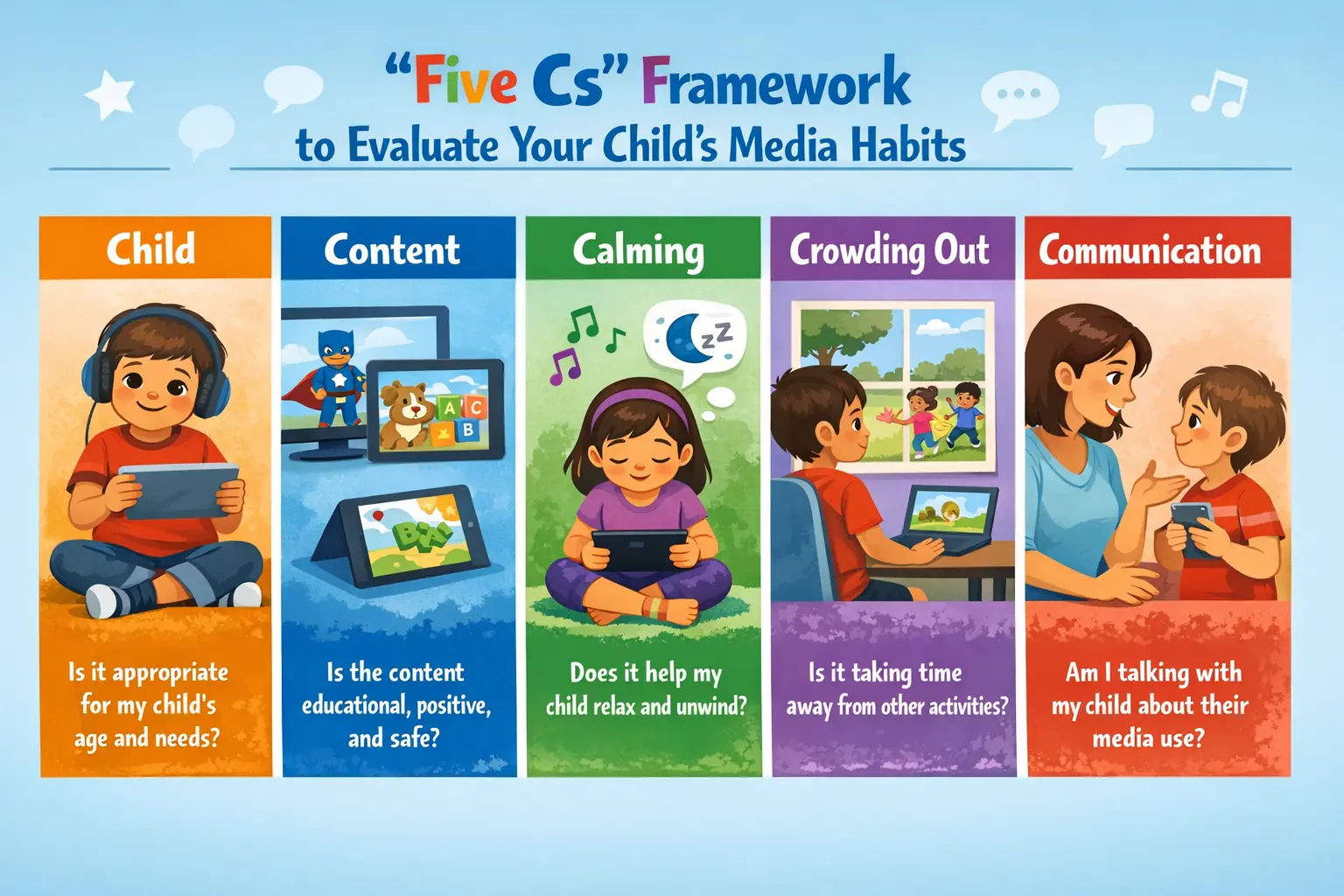
Experts suggest using the “Five Cs” framework to evaluate your child’s media habits.
The first C is Child. Every child responds differently to digital content. Some use screens creatively and responsibly. Others may become emotionally overwhelmed or addicted. Observe how your child reacts to screen exposure.
The second C is Content. Educational coding tutorials and interactive learning apps are very different from endless short-form videos. The quality of content matters more than raw screen hours.
The third C is Calming. Avoid using screens as the primary emotional regulation tool. If devices are consistently used to stop tantrums or boredom, children may struggle to develop independent coping skills.
The fourth C is Crowding Out. Ask yourself whether screen time is replacing healthier activities like outdoor play, reading, or family conversations.
The fifth C is Communication. Talk openly about digital safety, cyberbullying, advertising tactics, and privacy protection. Ongoing conversations build trust and awareness.
Create Tech-Free Zones at Home
One of the simplest and most effective strategies is creating designated tech-free areas.
The dining table should be device-free. Mealtime conversations strengthen family bonds and improve communication skills.
Bedrooms should also be screen-free, especially at night. Blue light exposure disrupts melatonin production and affects sleep quality. Experts recommend turning off screens at least one hour before bedtime.
Establishing physical boundaries reduces arguments because the rule applies to everyone equally.
Lead by Example as a Parent
Children copy adult behavior. If parents frequently scroll through phones while asking children to disconnect, the message loses credibility.
Demonstrate balanced digital habits by:
- Putting your phone away during conversations
- Avoiding screen use during family time
- Setting personal screen limits
Modeling healthy habits often influences children more effectively than strict rules.
Encourage Shared Screen Time
Not all screen time is harmful. Shared screen experiences can strengthen relationships.
Watching shows together, discussing storylines, or playing video games as a family transforms passive consumption into interactive engagement. Co-viewing also allows parents to monitor content quality naturally.
When children feel included rather than controlled, resistance decreases.
Offer Engaging Offline Alternatives
Children often default to screens out of boredom. Reducing screen time becomes easier when attractive alternatives are available.
Encourage:
- Outdoor sports or cycling
- Board games and puzzles
- Art, crafts, or music activities
- Cooking together as a family
When offline experiences feel rewarding, children rely less on digital entertainment.
Delay Personal Smartphone Ownership
One of the most effective ways to reduce long-term screen dependence is delaying the first smartphone.
There is no universal “right age.” Consider emotional maturity, responsibility, and rule-following behavior before introducing a personal device.
Some families begin with a basic phone for calls only before transitioning to full internet access later. Gradual exposure can reduce digital overwhelm.
Balance, Not Elimination
Reducing screen time does not mean banning technology entirely. Digital tools are essential in education and communication. The goal is balance.
Healthy digital habits include:
- Consistent sleep schedules
- Daily physical activity
- In-person social interaction
- Responsible online behavior
When these pillars remain strong, moderate screen use becomes less harmful.
Conclusion
Helping your child reduce screen time in 2026 requires awareness, consistency, and flexibility. The newest medical guidelines emphasize balance rather than rigid daily limits. By focusing on content quality, establishing tech-free zones, modeling healthy behavior, and encouraging offline engagement, parents can create a healthier relationship between children and technology.
Small daily changes lead to long-term benefits. Protecting your child’s mental and physical well-being is worth the effort.
Source - healthychildren.org , choc.org
Frequently Asked Questions