
 English
 Russian
 Español
 Français
 Deutsch
 Sinhala

How Apple’s New Vapor Chamber Cooling System Works in the Latest iPhone

As smartphone processors grow more powerful and apps demand higher performance, heat management has become a major engineering challenge. Apple has introduced a vapor chamber cooling system in its latest iPhone 17 models to address this issue. This upgrade helps the device stay cooler, deliver stronger sustained performance and protect battery health. Let us explore how this system works, why it matters and what makes it different from older cooling techniques.
What is a vapor chamber cooling system
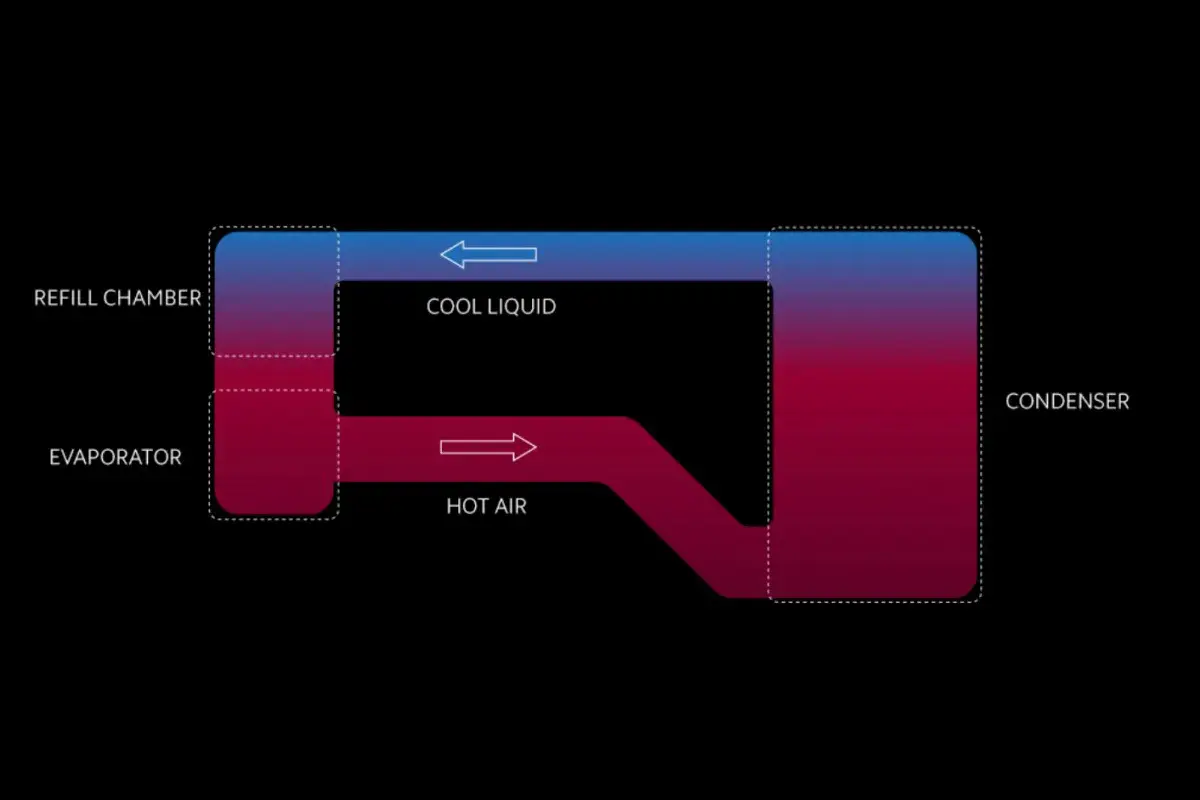
A vapor chamber is a flat, sealed metal enclosure that contains a small amount of liquid and an internal wick structure. When the processor heats up, the liquid inside absorbs the heat and evaporates into vapor. The vapor spreads across the chamber to cooler areas where it condenses back into liquid. The wick then pulls the liquid back to the hot zone, creating a continuous cycle of heat transfer.
In simple terms, a vapor chamber acts like a tiny heat spreading engine that uses the transition between liquid and vapor to move heat faster and more evenly than metal sheets alone.
How Apple implements the vapor chamber
Apple designed its vapor chamber to work together with the iPhone frame. The chamber is welded into the internal aluminum structure so the frame becomes part of the cooling path.
Here is how it works:
- The chamber holds deionized water sealed under controlled pressure.
- When the A series chip generates heat, the liquid evaporates at the hot spot.
- The vapor moves to cooler zones of the chamber and condenses.
- The aluminum chassis absorbs and spreads the heat across the device.
- The wick structure returns the condensed liquid to the hot area where the cycle begins again.
This design allows the processor to operate at high speeds for longer without overheating.
Why Apple shifted to vapor chamber cooling
Previous iPhone models used graphite sheets and copper plates for passive heat conduction. These work well for light tasks but struggle during long gaming sessions, extended video shooting or intensive AI processing. The vapor chamber offers several important improvements.
Higher sustained performance
The new system reduces thermal throttling which helps the device maintain high performance for longer periods.
Lower device temperature
Heat is spread more evenly so the phone feels cooler during demanding workloads.
Better battery protection
Lower internal temperatures slow battery wear and support long term battery health.
More comfort for gaming and video recording
Users experience less heat along the back panel and camera area.
How it compares with older cooling systems
Older systems rely only on conduction. Heat travels through layers of metal which slows down as distance increases. A vapor chamber uses evaporation and condensation which movHow it compares with older cooling systems
Older systems rely only on conduction. Heat travels through layers of metal which slows down as distance increases. A vapor chamber uses evaporation and condensation which move heat more efficiently.
As a result:
- Heat spreads across the chamber quickly.
- The system handles repeated high heat loads well.
- The device remains more stable under heavy use.
This gives Apple more flexibility to push higher chip performance without raising surface temperatures.
Are there any limitations
Although powerful, the vapor chamber has a few considerations.
- It needs precise manufacturing since the chamber must remain perfectly sealed.
- It occupies more space than thin graphite cooling layers.
- Most benefits appear during heavy workloads, so casual users may not notice dramatic differences.
What this means for everyday users
If you use your iPhone for gaming, video editing, photography or AI tasks, you will see smoother performance with fewer slowdowns caused by heat. The device will stay cooler and performance drops will be less frequent. Over time, improved heat control can help maintain battery stability.
Conclusion
Apple’s vapor chamber cooling system marks a significant step forward in smartphone thermal engineering. By combining phase change technology with the aluminum chassis, Apple has created a cooling system that supports higher performance with lower heat buildup. As apps and processors evolve, advanced cooling systems like this will be essential for maintaining comfort, speed and durability.
source - 9to5mac.com, benks.com