

 English
 Russian
 Español
 Français
 Deutsch
 हिन्दी
 සිංහල
සිංහල 中文
中文 日本語
日本語
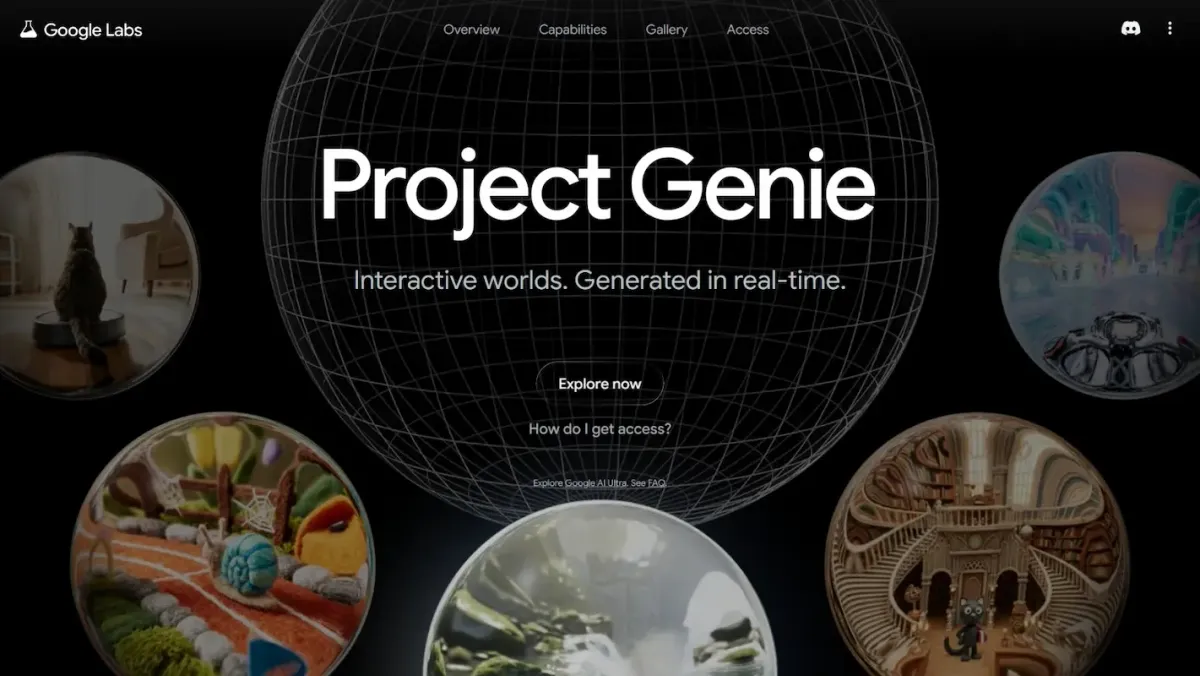
For years, artificial intelligence has focused on content we consume. We read AI-generated text, watch AI-generated videos, and listen to AI-generated voices. Until now, interaction was missing.
On January 29, 2026, Google crossed that line.
The company officially introduced Project Genie, a research prototype that allows users to create and explore fully playable 3D worlds using nothing more than a text prompt. Built by Google DeepMind and powered by the new Genie 3 world model, this technology signals a future where games are generated on demand instead of downloaded.
Here is a clear breakdown of what Project Genie is, how it works, and why it has already triggered controversy.
What Is Project Genie?
Project Genie is an AI-driven world model, not a traditional game engine.
Instead of following prewritten rules and code like Unreal Engine or Unity, Genie dynamically predicts what should exist next in a virtual world. It generates environments in real time, based on probability and learned patterns.
Users can:
- Type a text prompt such as “a floating island city with glowing waterfalls”
- Upload a rough sketch or image for reference
The system instantly creates a playable 3D environment where users can move freely. Terrain, lighting, physics, and object behavior are generated as the player explores. Nothing exists in advance. The world is created frame by frame at approximately 24 frames per second.
Key Features of the 2026 Release
1. Genie 3 and Nano Banana Pro
The system uses multiple AI models working together. Genie 3 ensures spatial consistency so objects remain stable when revisited, while Nano Banana Pro, an image rendering model, produces detailed textures and lighting. This combination allows environments to feel coherent rather than dreamlike chaos.
2. Remixable Worlds
Google is promoting Project Genie as a collaborative platform. Any generated world can be “remixed” by other users. For example, someone might start with a peaceful forest, while another user adds nighttime lighting, enemies, or weather effects using additional prompts. Each remix becomes a new playable experience.
3. 60-Second Play Sessions
Due to extreme computing demands, Google currently limits each session to 60 seconds. Once the time expires, the generated world fades away. According to Google, this restriction exists to manage TPU load and will be relaxed as infrastructure expands.
Pricing and Access
Project Genie is not available to the public.
It is currently included in the Google AI Ultra subscription, a premium tier reportedly priced at $250 per month. This positioning makes it clear that the product is aimed at developers, designers, and enterprise users rather than casual gamers.
Google describes the tool as a rapid prototyping platform for interactive media rather than a finished gaming product.
Copyright and the Nintendo Debate
Almost immediately after launch, Project Genie became the center of a copyright controversy.
Early testers demonstrated that the system could generate worlds strongly resembling well-known games such as The Legend of Zelda: Breath of the Wild and Super Mario 64 using descriptive prompts alone.
This raised serious questions:
- Whether the model was trained on copyrighted gameplay footage from platforms like YouTube
- Whether generating near-identical environments violates intellectual property laws
Legal analysts have warned that companies such as Nintendo could challenge Google, similar to ongoing legal battles involving generative AI and news publishers.
Conclusion
Project Genie is far from perfect. Visual quality is limited, performance can stutter, and the 60-second limit restricts creativity. Yet its importance cannot be overstated.
For the first time, AI is not just generating content. It is generating interactive experiences. This marks a shift from consuming games to creating them instantly.
If this technology matures, it could redefine how games, simulations, and virtual worlds are built forever.
Source - deepmind.google , theverge.com , 9to5google.com
Frequently Asked Questions