 English
 Russian
 Español
 Français
 Deutsch
 हिन्दी
 සිංහල
සිංහල 中文
中文 日本語
日本語
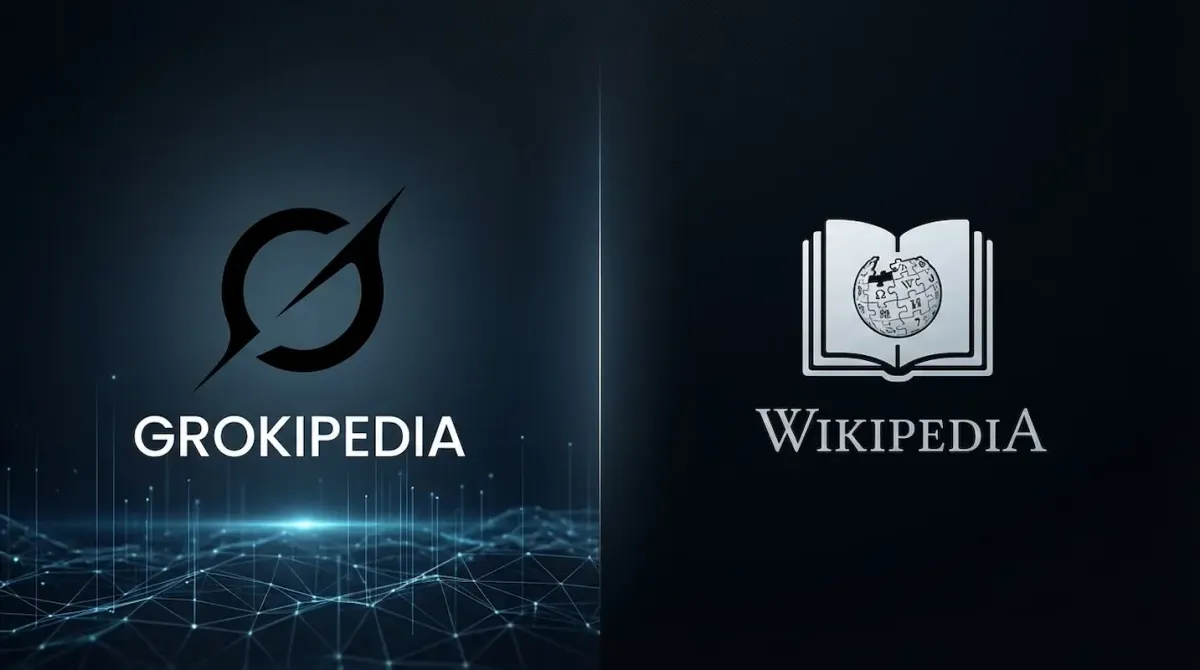
The way people access and trust online knowledge is starting to change. For more than twenty years, Wikipedia has been the most widely used source for quick, free information on almost any topic. Built by millions of volunteers around the world, it represents a collective effort to document human knowledge in an open and transparent way. Now, that long-standing model is being challenged. In late 2025, Elon Musk introduced Grokipedia, an AI-powered platform that aims to rethink how information is created, updated, and shared on the internet.
Grokipedia is positioned as more than just another encyclopedia website. Developed by xAI, Elon Musk’s artificial intelligence company, the platform uses advanced AI systems to generate and update content at high speed. Supporters see it as a modern solution for an internet that moves too fast for traditional editing models. Critics, however, raise serious questions about accuracy, bias, and whether machines should be trusted to decide what is true. As with many Musk-led projects, Grokipedia has quickly become a topic of global debate.
The Idea Behind Grokipedia
The roots of Grokipedia can be traced back to Elon Musk’s long-standing criticism of Wikipedia. Over the years, Musk has openly argued that Wikipedia fails to remain politically neutral and reflects the views of a narrow group of editors. He has often claimed that this creates hidden bias in articles, especially on social and political topics. These concerns eventually evolved into a bigger idea: building an encyclopedia that does not rely on slow human consensus.
In October 2025, xAI released the first beta version, Grokipedia v0.1. The project’s stated goal is to deliver information that is factual, unbiased, and constantly updated. According to Musk, relying mainly on artificial intelligence for editorial decisions could reduce human influence and ideological pressure. By shifting control from large editor communities to algorithms, Grokipedia aims to present information in a more consistent and objective way, at least in theory.
How Grokipedia Generates Content
Unlike Wikipedia, which depends on human editors to write, review, and approve every change, Grokipedia is powered by the Grok AI language model. This allows the platform to create and update articles much faster than any human-led system. At launch, Grokipedia already contained close to 900,000 articles, and that number can grow rapidly because content generation is automated.
One key feature of Grokipedia is its ability to use real-time data. The AI pulls information from many online sources, including public content from the X platform. This gives Grokipedia a strong advantage when covering breaking news or trending events. While Wikipedia articles often take time to stabilize during developing stories, Grokipedia can update entries within seconds. The AI continuously analyzes new data and rewrites articles to reflect the latest available information.
Editorial Control Without Open Editing
Editorial control is where Grokipedia differs most clearly from Wikipedia. Wikipedia allows almost anyone to edit an article, as long as they follow community rules and provide reliable sources. This open model has helped Wikipedia grow, but it has also led to edit wars, vandalism, and long debates over controversial topics.
Grokipedia removes public editing entirely. There is no option for users to directly change content. Instead, users can submit feedback or suggest corrections. The Grok AI then checks these suggestions against other data sources. If the AI finds the claim valid, it updates the article automatically. This machine-driven review process is designed to limit manipulation and reduce the influence of small, highly active editor groups. Musk argues that this system helps protect articles from coordinated bias and misinformation.
Using Wikipedia as a Foundation
Despite presenting itself as a competitor, Grokipedia does not start from scratch. The platform makes extensive use of Wikipedia content, which is legally allowed under the Creative Commons Attribution-ShareAlike 4.0 license. This license permits reuse and modification of content as long as proper credit is given.
Many Grokipedia articles are AI-rewritten versions of existing Wikipedia pages. These entries usually include a disclaimer noting that the original content was adapted from Wikipedia. The Grok AI then adjusts the wording, adds recent information, and changes the tone to match Grokipedia’s style. Critics argue that this makes Grokipedia heavily dependent on the same human work it claims to replace. Supporters, however, believe the AI’s ability to update and reinterpret content is what gives the platform its real value.
Accuracy, Sources, and AI Limitations
One of the biggest concerns surrounding Grokipedia is accuracy. Large language models are known to occasionally produce incorrect information, often called AI hallucinations. In the weeks following the launch, researchers identified several errors in Grokipedia articles, including incorrect biographical details and oversimplified scientific explanations.
Another issue is transparency in sourcing. Wikipedia emphasizes clear citations for nearly every factual claim, allowing readers to verify information easily. Grokipedia articles tend to be more narrative and conversational, with fewer visible references. This makes it harder for readers to trace where specific facts come from. Many educators and researchers worry that speed and readability may come at the cost of reliability, especially for academic or historical topics that require deep expertise.
From Grokipedia to Encyclopedia Galactica
Elon Musk has stated that Grokipedia v0.1 is only the beginning. Future versions are expected to improve fact-checking, reduce errors, and offer better documentation. Musk has also shared an ambitious long-term vision for the project. He plans to eventually rename it Encyclopedia Galactica, inspired by Isaac Asimov’s science fiction series.
The idea is to create a complete and lasting record of human knowledge that could be stored beyond Earth, including on the Moon or Mars. In Musk’s view, such an encyclopedia would support a future multi-planetary civilization by preserving human history and scientific understanding. Whether this vision becomes reality depends on how well AI systems can handle truth, complexity, and disagreement in the real world.
Final Thoughts on a Growing Rivalry
Grokipedia marks an important moment in the evolution of online knowledge platforms. It is one of the first serious attempts to use generative AI as the primary engine behind a global encyclopedia. Wikipedia remains unmatched in terms of depth, community involvement, and transparent sourcing. Grokipedia, on the other hand, highlights the potential of speed, automation, and real-time updates.
This competition may ultimately benefit users. Wikipedia could be encouraged to modernize some of its processes, while Grokipedia must work hard to earn public trust. In the end, the success of either platform will depend on one critical factor: whether people believe the information they provide is accurate, fair, and reliable.
Frequently Asked Questions