

 English
 Russian
 Español
 Français
 Deutsch
 हिन्दी
 සිංහල
සිංහල 中文
中文 日本語
日本語
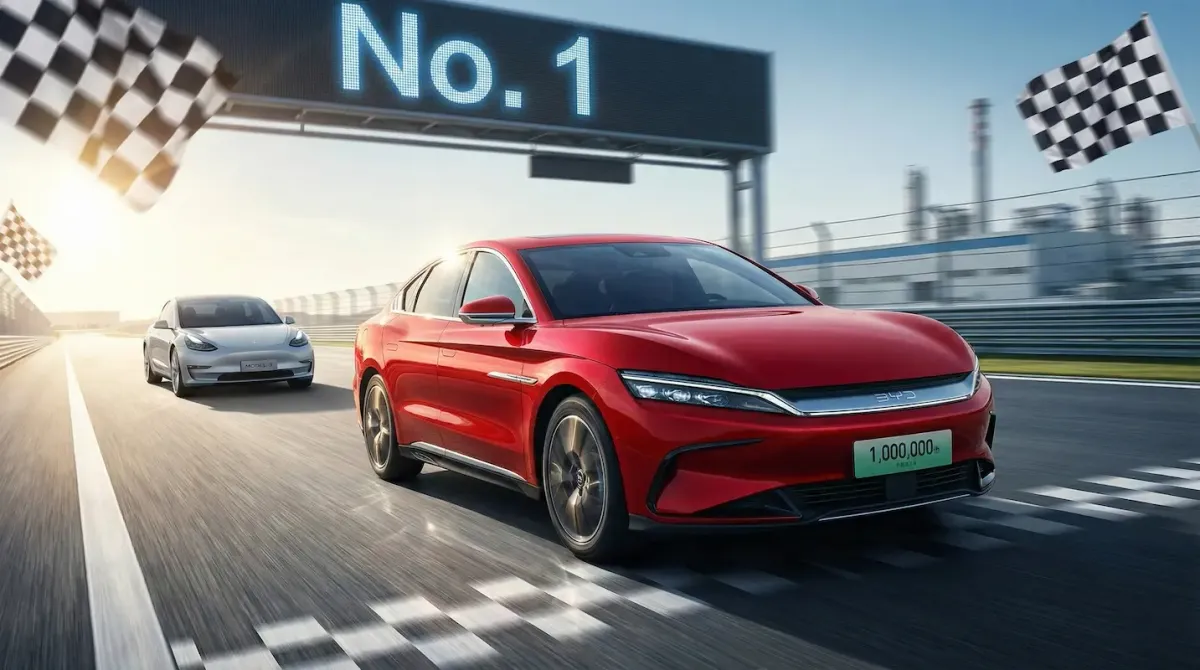
For more than a decade, Tesla defined the global electric vehicle market. It set the pace for innovation, production scale, and consumer demand. However, January 2026 marked a historic turning point. Full-year 2025 sales data confirmed what industry analysts had been warning for months: Tesla is no longer the world’s largest seller of fully electric vehicles.
China’s BYD (Build Your Dreams) has officially overtaken Tesla in global Battery Electric Vehicle sales, signaling a major shift in the balance of power within the EV industry. While BYD has long dominated total electrified vehicle sales by including hybrids, 2025 marks the first full calendar year in which it surpassed Tesla in pure electric vehicle volume.
The Numbers Behind the Shift
The gap between the two companies in 2025 was significant and impossible to ignore.
- BYD 2025 BEV Sales: 2.26 million vehicles (up 28 percent year over year)
- Tesla 2025 BEV Sales: 1.64 million vehicles (down 9 percent year over year)
BYD outsold Tesla by more than 600,000 fully electric vehicles. Just two years earlier, Tesla held a comfortable lead. Instead of growing alongside the expanding EV market, Tesla recorded its second consecutive year of declining deliveries while BYD accelerated rapidly.
Why Tesla Fell Behind in 2025
Tesla’s loss of the top position was not caused by a single issue. Several structural and strategic challenges converged during 2025.
The Missing Affordable Tesla
Tesla’s product lineup has aged without a true low-cost successor. The long-rumored “Model 2” failed to materialize, leaving Tesla without an entry-level offering as competition intensified.
BYD filled this gap aggressively. Vehicles such as the BYD Seagull, priced under $12,000 in China, allowed the company to dominate the mass-market segment. Tesla, by contrast, continued relying heavily on the Model 3 and Model Y, effectively abandoning the lowest price tiers of the EV market.
The Impact of US Tax Credit Changes
Tesla’s home market also became more challenging in late 2025. The gradual removal of the $7,500 federal EV tax credit in the United States significantly increased the effective purchase price of Tesla vehicles.
This policy shift had an immediate cooling effect on demand, particularly in the fourth quarter. While competitors diversified geographically, Tesla remained heavily exposed to changes in North American incentives.
The Elon Musk Effect
Tesla’s brand has long been intertwined with Elon Musk’s public persona. In 2025, Musk’s increasing involvement in political and government efficiency initiatives reportedly alienated portions of Tesla’s traditional customer base.
Analysts noted that this reputational shift weakened Tesla’s appeal in key markets such as California and parts of Europe, allowing rivals to capture customers who once defaulted to Tesla as the EV brand of choice.
BYD’s Global Strategy Advantage
Perhaps the most striking aspect of BYD’s victory is how it achieved it. The company does not sell passenger vehicles in the United States, yet still managed to overtake Tesla globally.
BYD’s strength lies in its dominance of the Chinese market, combined with aggressive expansion across Europe, Southeast Asia, Latin America, and emerging economies. The company offers a broad portfolio ranging from budget hatchbacks to premium electric SUVs.
Tesla, by comparison, relied heavily on just two high-volume models. BYD’s vertical integration, control over battery supply, and flexible pricing strategy gave it a decisive advantage as global EV demand diversified.
What This Means for the EV Industry
Tesla losing the top spot does not signal its collapse. The company remains highly profitable and technologically influential. However, the era of uncontested Tesla dominance is clearly over.
As Tesla pivots toward artificial intelligence, autonomous driving, and robotaxi services, it may be willing to sacrifice volume leadership in favor of higher-margin future technologies. BYD, meanwhile, appears content to win through scale, affordability, and global reach.
Conclusion
The global electric vehicle market entered a new phase in 2025. BYD’s rise to the top reflects a broader shift in automotive power toward China and emerging markets. Tesla’s loss of the crown underscores how quickly leadership can change in a fast-moving industry.
As 2026 begins, the center of gravity in the EV world has moved decisively from Silicon Valley to Shenzhen. Whether Tesla chooses to fight for volume leadership again or redefine success on its own terms will shape the next chapter of the electric revolution.
Frequently Asked Questions