Top AI-Powered Creativity Tools for Content Creators in 2026
Discover the absolute best AI tools for content creators in 2026. Learn how to use software like Gemini 3.1 Pro, Canva, and Veo 3.1 to save hours of work.
 English
 Russian
 Español
 Français
 Deutsch
 हिन्दी
 සිංහල
සිංහල 中文
中文 日本語
日本語
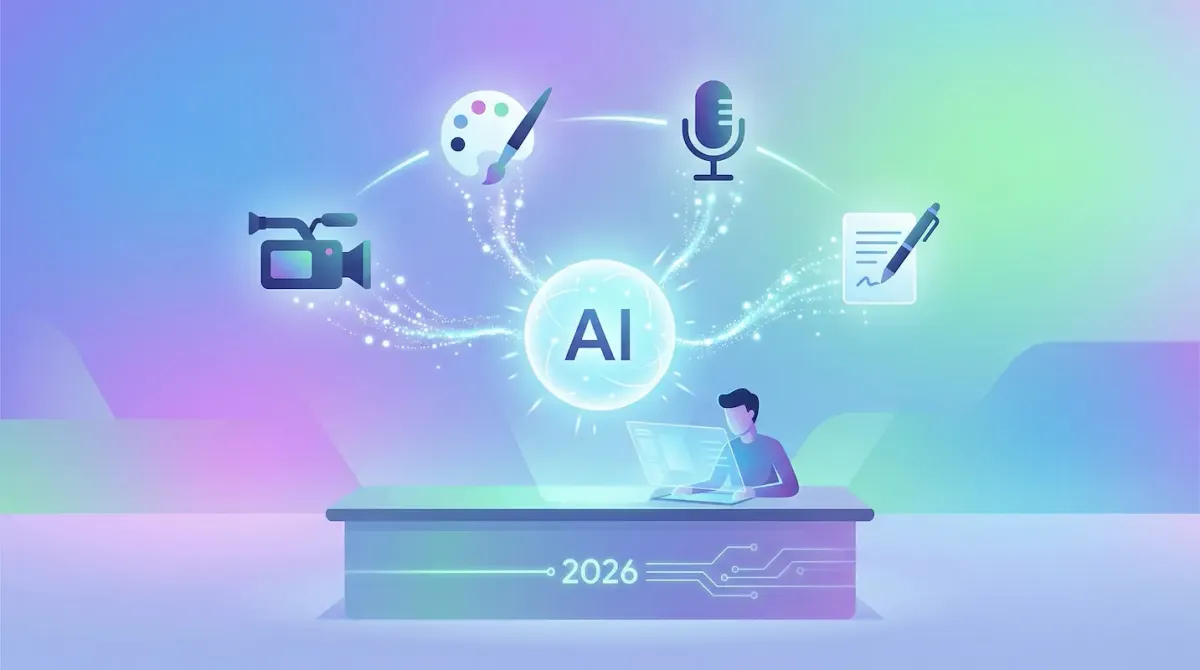
Creating digital content used to require mastering several difficult skills at once. Successful creators had to write articles, design graphics, edit videos, produce audio, and manage marketing campaigns on their own. This process was time-consuming and often overwhelming for individuals working alone.
In 2026, artificial intelligence has dramatically changed how creators work. Modern AI tools can assist with writing, graphic design, video production, and even music creation. Instead of spending hours on repetitive tasks, creators can focus on ideas and storytelling while software handles the technical work.
This guide explores the best AI-powered creativity tools for content creators in 2026, organized by category so you can easily find the tools that match your workflow.
AI Tools for Writing and Brainstorming
Every piece of content begins with an idea. Planning articles, outlining scripts, and organizing research can take significant time, especially when working on complex topics. AI writing assistants can dramatically speed up this process.
One of the most powerful tools available today is Google Gemini 3.1 Pro. Released in early 2026, it features a massive context window capable of handling up to one million tokens of information. This allows creators to upload large documents, research papers, or entire books and receive structured insights almost instantly.
Another widely used option is ChatGPT, which remains one of the most reliable tools for brainstorming and content planning. Many creators use it for generating blog outlines, writing email newsletters, and developing marketing strategies. Its ability to quickly organize thoughts makes it a valuable everyday assistant for writers and marketers.
AI Tools for Images and Graphics
Visual quality plays a major role in attracting attention online. High-quality thumbnails, graphics, and social media images can significantly increase engagement.
One of the newest AI image generators is Google Nano Banana 2. Built on the Gemini Flash architecture, it generates high-resolution visuals in just seconds. A major improvement over older image generators is its ability to render readable text inside images, which is extremely useful for creating posters, thumbnails, and promotional graphics.
For creators who want an easy design workflow, Canva Magic Studio is an excellent solution. It combines AI image generation with drag-and-drop templates, allowing users to quickly produce social media posts, YouTube thumbnails, and marketing graphics without professional design experience.
AI Video Generation Tools
Video remains the most dominant content format across the internet. Producing cinematic videos once required expensive equipment and professional editing skills, but AI tools now make video generation far more accessible.
Google Veo 3.1 currently leads the AI video generation space. With simple text prompts, creators can generate realistic video scenes that include matching sound effects and background audio automatically.
Another advanced platform is Runway Gen 4.5, which gives creators more cinematic control over generated footage. Users can specify camera movements such as zooming, tracking shots, or panning across landscapes. This makes it particularly useful for filmmakers, advertisers, and professional content creators.
Smart Video Editing and Content Repurposing
Even when you already have recorded content, editing it into polished clips can take hours. AI-powered editing tools now simplify this process dramatically.
CapCut Online is one of the most popular browser-based video editors. Its automatic caption generator listens to spoken audio and creates subtitles instantly. This feature is especially valuable because many viewers watch videos on mobile devices without sound.
Another powerful tool is Opus Clip, which specializes in content repurposing. Creators can upload long-form videos such as podcasts or interviews, and the AI automatically identifies the most engaging segments. It then generates multiple short clips formatted for vertical platforms like TikTok, Instagram Reels, or YouTube Shorts.
AI Music and Voice Generation
Audio quality plays a major role in how audiences experience digital content. Finding copyright-safe music and professional voiceovers can be difficult for independent creators.
Google Lyria 3 solves this challenge by allowing users to generate custom music tracks through simple prompts. Creators can request specific moods, genres, or styles, and the system produces original audio with optional lyrics and vocals. Each track also includes a hidden SynthID watermark to maintain transparency and copyright safety.
For voice narration, ElevenLabs remains one of the most realistic AI voice platforms available. It offers hundreds of voice styles, languages, and accents, making it perfect for YouTube narrations, audiobooks, and explainer videos.
All-in-One AI Workspaces
One challenge many creators face is managing multiple tools at the same time. Switching between writing software, image generators, and video editors can disrupt creative focus.
To address this issue, several companies are developing all-in-one AI workspaces.
Manus is a multi-model AI agent platform that connects different AI systems into a single workflow. Users can generate articles, create visuals, and manage tasks without leaving the interface.
Another platform gaining attention is iMini AI, which aggregates several image and video generation tools into one dashboard. This unified environment helps creators move faster without constantly changing applications.
Conclusion
Artificial intelligence is not replacing content creators. Instead, it is becoming a powerful creative assistant that removes repetitive work and accelerates production.
Tools like Gemini 3.1 Pro help writers organize ideas faster. Image generators such as Nano Banana 2 make visual design easier. Video tools like Veo 3.1 and Runway Gen 4.5 allow creators to produce cinematic content with minimal resources.
By integrating these AI tools into their workflow, creators can spend less time on technical tasks and more time focusing on creativity, storytelling, and audience engagement.
Source - zapier.com , happyscribe.com , datacamp.com
Frequently Asked Questions